In today’s competitive drinkware market, vacuum insulated water bottles have become the benchmark for performance, durability, and premium positioning.
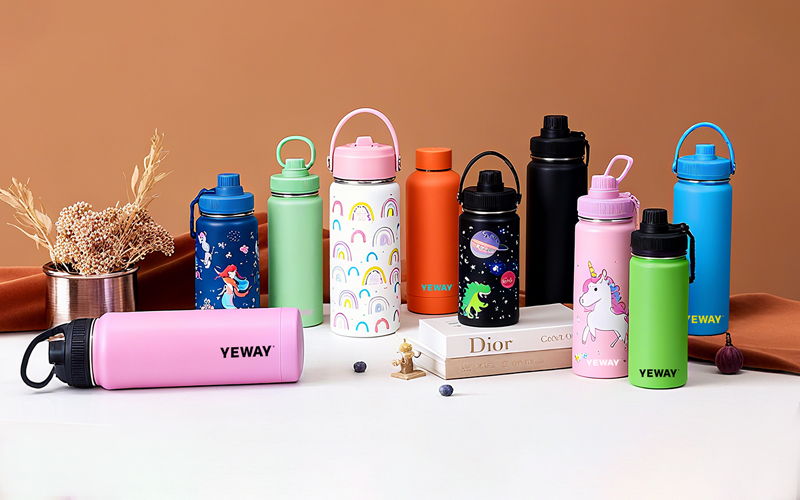
For brand owners, wholesalers, and distributors, understanding how these bottles work—and what defines quality—is essential for building a competitive product line and making informed sourcing decisions.
This guide covers everything from insulation science and material selection to OEM customization and market trends.
What Is a Vacuum Insulated Water Bottle?
A vacuum insulated water bottle is a high-performance container designed to maintain the temperature of its contents for extended periods.
Unlike single-wall bottles, these products feature a double-wall stainless steel construction with a vacuum layer in between. By removing air from this space, the bottle creates a thermal barrier that significantly reduces heat transfer.
This technology is now widely used across premium drinkware markets in Europe and North America.
What Are the Benefits of Vacuum Insulated Water Bottles?
For both consumers and brands, vacuum insulation offers several key advantages:
- Superior Temperature Retention: Keeps beverages cold for up to 24 hours and hot for 12 hours or more
- Eco-Friendly & Sustainable: A reusable alternative to single-use plastics, supporting ESG goals
- Zero Condensation: Sweat-proof exterior protects bags and surfaces Durability: Stainless steel construction ensures long-term performance
- Premium Market Positioning: Ideal for high-end retail and branded product lines
How Do Vacuum Insulated Water Bottles Work?
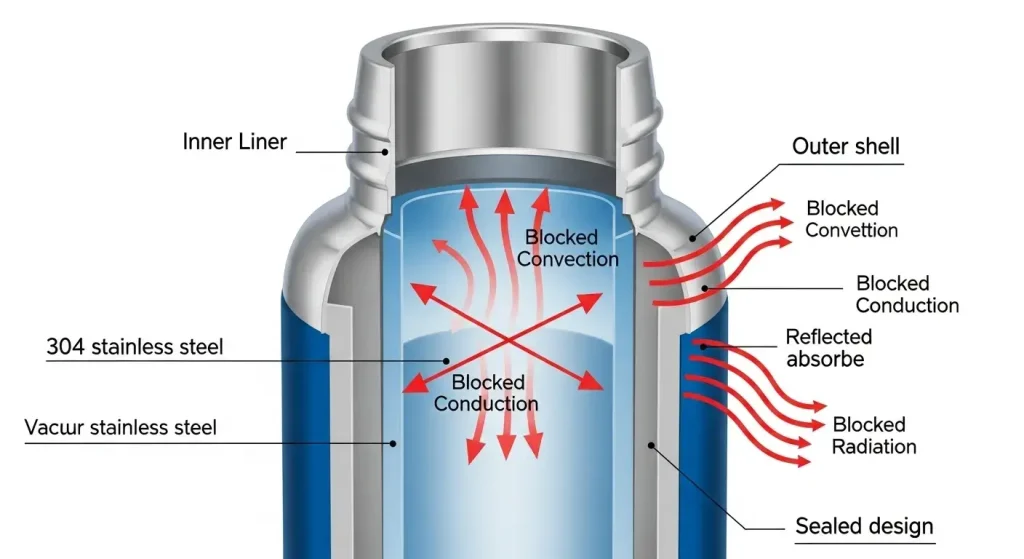
The performance of these bottles is based on controlling how heat moves.
The Anatomy of a Vacuum Bottle
- Double-Wall Construction: Inner and outer stainless steel layers
- Vacuum Layer: Air is removed between the walls, eliminating the medium for heat transfer
The Science of Heat Transfer Prevention
To maintain temperature, a bottle must reduce three types of heat transfer:
- Conduction: Reduced by minimizing direct material contact
- Convection: Eliminated because there is no air for heat to circulate
- Radiation: Reduced using reflective coatings such as copper lining
High-end models often include copper coating, which can improve insulation performance by up to 15–20%, making it a strong differentiator for premium product lines.
Types of Insulated Water Bottles (Vacuum vs Others)
Understanding product types helps brands position correctly:
- Vacuum Insulated Bottles: Best performance, slim design, premium market
- Double-Wall (Non-Vacuum): Moderate insulation, lower cost
- PU Insulated Bottles: Foam-based insulation, bulkier and less efficient
- Single-Wall Bottles: No insulation, basic hydration use
For export markets, vacuum insulation is the industry standard.
How to Choose Materials for Vacuum Insulated Water Bottles (304 vs 316 Explained)
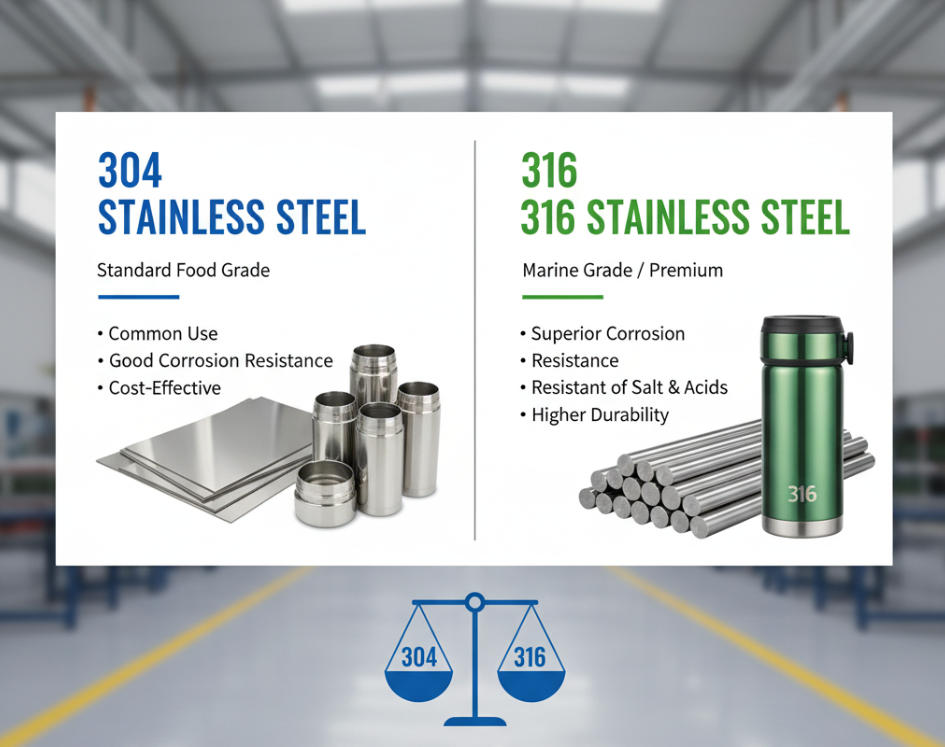
Material selection directly impacts durability, safety, and price positioning.
- 304 Stainless Steel: Industry standard, cost-effective, widely used
- 316 Stainless Steel: Premium option with higher corrosion resistance, ideal for high-end markets
For brands developing product lines, choosing the right material helps define both product quality and target market.
Our range of insulated stainless steel water bottles supports OEM customization and bulk production for global brands.
Performance Upgrades: Copper Coating & Advanced Features
Beyond base materials, performance can be enhanced through additional engineering:
- Copper Coating: Reflects heat radiation back into the liquid
- Enhanced Lid Sealing: Improves real-world insulation performance
- Powder Coating Finishes: Improves durability and aesthetics
These upgrades are often used in premium outdoor, sports, and lifestyle collections.
Vacuum Insulated Water Bottle Sizes & Applications
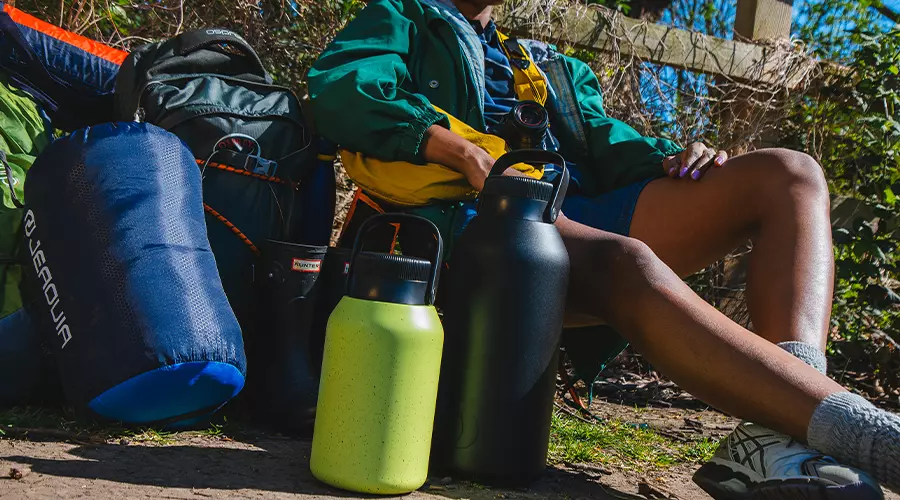
Different markets require different specifications:
- 500ml: Everyday carry, office use
- 750ml–1L: Fitness and commuting
- 1.5L–2L: Outdoor, camping, long-duration hydration
Are Stainless Steel Water Bottles Better Than Plastic?
For most modern applications, stainless steel water bottles are widely considered superior to plastic alternatives—especially in premium markets.
Here’s why:
- Better Temperature Retention: Stainless steel bottles support vacuum insulation, while most plastic bottles do not
- Higher Durability: Resistant to impact, deformation, and long-term wear
- Health & Safety: BPA-free stainless steel does not retain odors or leach chemicals
- Premium Positioning: Preferred by brands targeting mid-to-high-end consumers
Plastic bottles still have advantages in cost and weight, but for performance-driven and brand-focused products, stainless steel is the industry standard.
For a deeper comparison, see our guide on stainless steel vs plastic water bottles
Vacuum Insulated Water Bottles for Kids

For children’s products, safety and usability are critical:
- Lightweight construction
- Leak-proof lids
- BPA-free materials
Explore our kids drinkware solutions for school and lifestyle applications.
Regional Terminology: What Is “Thermosteel”?
In markets such as India and Southeast Asia, the term “Thermosteel” is commonly used to describe stainless steel vacuum bottles.
While terminology varies, the core technology remains the same—vacuum insulation for temperature retention.
Why Quality Matters for Brands and Distributors
For B2B buyers, product quality directly affects:
- Customer satisfaction
- Brand reputation
- Return rates
- Long-term growth
Working with an experienced manufacturer ensures consistent performance and scalable production.
How to Choose the Right Vacuum Insulated Water Bottle Manufacturer
For brands and distributors, selecting the right manufacturing partner is just as important as choosing the product itself.
Key factors to consider include:
- Material Options: Availability of 304 and 316 stainless steel for different market segments
- Customization Capabilities: Support for OEM/ODM including logos, coatings, and packaging
- Quality Certifications: Compliance with FDA, LFGB, and other international standards
- Production Capacity: Ability to scale while maintaining consistent quality
Working with an experienced manufacturer helps reduce risk, improve product consistency, and accelerate time-to-market.
Learn more in our full guide on how to choose a water bottle manufacturer
FAQs About Vacuum Insulated Water Bottles
How long do insulated bottles keep drinks hot or cold?
Typically 12 hours hot and 24 hours cold, depending on design and quality.
Is an insulated water bottle safe?
Yes, when made from food-grade stainless steel and BPA-free materials (FDA/LFGB compliant).
What is the difference between PU and vacuum insulation?
PU uses foam and offers lower performance, while vacuum insulation provides superior temperature control.
Do insulated bottles stop working?
Only if the vacuum seal is damaged, usually due to severe impact.
Can vacuum insulated bottles be customized?
Yes. OEM options include logo printing, coatings, packaging, and material selection (304/316).
Looking to Develop Your Own Insulated Water Bottle Line?
Our team supports global brands with OEM customization, material selection, and scalable manufacturing.
For brands, distributors, and OEM buyers, understanding these factors is essential to selecting reliable partners and ensuring consistent product performance at scale.
Contact us today to request samples, discuss your project, or get a tailored quote.
View our latest product catalog to explore available designs.