Stainless steel drinkware is becoming increasingly popular, from reusable water bottles and tumblers to coffee mugs and insulated flasks. Its durability, reusability, and recyclability make stainless steel an attractive choice for brands looking for long-lasting and more sustainable drinkware.
Among the stainless steel grades commonly used in drinkware manufacturing, SUS 304 and SUS 316 are two of the most common choices.
So, what’s the difference between 304 and 316 stainless steel? Is 316 really better than 304, and is the higher cost worth it?
In this guide, we’ll compare 304 vs. 316 stainless steel in terms of chemical composition, corrosion resistance, food-contact use, strength, heat resistance, cost, and practical applications.
304 vs. 316 Stainless Steel at a Glance
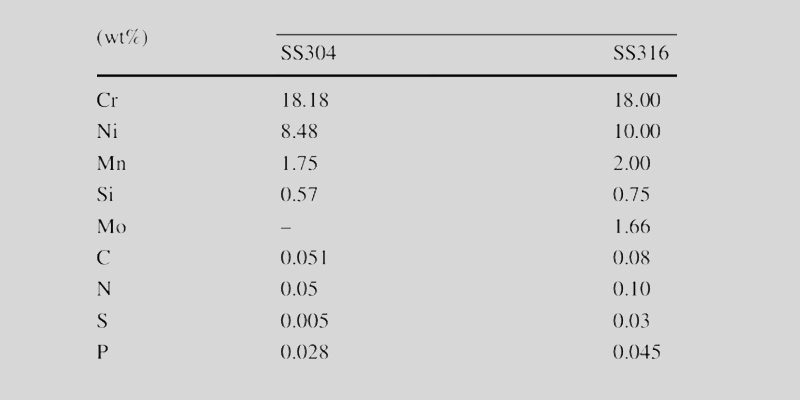
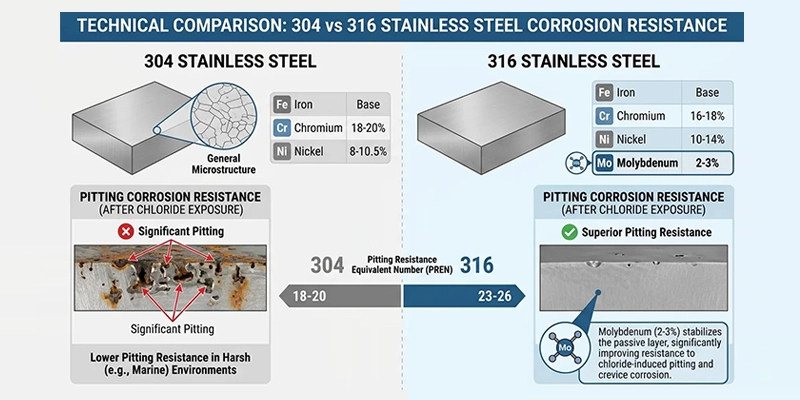
The main difference between 304 and 316 stainless steel is their chemical composition. Both contain chromium and nickel, but 316 also contains around 2–3% molybdenum, which gives it better resistance to certain types of corrosion, especially chloride-related corrosion.
| Feature | 304 Stainless Steel | 316 Stainless Steel |
|---|---|---|
| Common name | 18/8 stainless steel | 316 stainless steel |
| Chromium | Approx. 18% | Approx. 16–18% |
| Nickel | Approx. 8–10.5% | Approx. 10–14% |
| Molybdenum | Generally not a major addition | Approx. 2–3% |
| Corrosion resistance | High | Higher |
| Chloride resistance | Good | Better |
| Strength | Similar in many applications | Similar in many applications |
| Heat resistance | Good | Good |
| Food-contact use | Common | Common |
| Cost | Lower | Higher |
| Typical applications | General-purpose products | More demanding applications |
The biggest advantage of 316 is its higher corrosion resistance. For many everyday applications, however, 304 already provides a good balance of performance and cost.
What Is 304 Stainless Steel?
304 is one of the most widely used stainless steel grades. It is commonly found in food equipment, kitchenware, drinkware, appliances, and many other everyday products.
It is often called 18/8 stainless steel because it typically contains around 18% chromium and 8% nickel.
Chromium helps stainless steel form a passive oxide layer on its surface, which protects the material from corrosion. Nickel also contributes to corrosion resistance, toughness, and formability.
Key Advantages of 304 Stainless Steel
304 stainless steel material is popular because it offers a good combination of:
- Corrosion resistance
- Durability
- Formability
- Surface finish
- Food-contact suitability
- Cost efficiency
For general-purpose stainless steel drinkware, 304 is often enough to provide the performance needed without the additional material cost of 316.
What Is 316 Stainless Steel?
316 stainless steel is another austenitic stainless steel grade with a chemical composition similar to 304, but with one important difference: molybdenum.
316 typically contains around 2–3% molybdenum. This improves its resistance to localized corrosion, particularly pitting corrosion associated with chloride exposure.
316 is therefore commonly used in applications where corrosion resistance is more demanding.
Key Advantages of 316 Stainless Steel
Compared with 304, 316 offers:
- Higher resistance to chloride-related corrosion
- Better resistance to pitting corrosion
- Good overall durability
- Good formability
- Suitability for demanding environments
The higher performance comes with a higher material cost, so 316 is not automatically the right choice for every product.
304 vs. 316 Stainless Steel Chemical Composition
The chemical composition is the main reason 304 and 316 behave differently.
| Element | 304 Stainless Steel | 316 Stainless Steel |
|---|---|---|
| Chromium (Cr) | Approx. 18% | Approx. 16–18% |
| Nickel (Ni) | Approx. 8–10.5% | Approx. 10–14% |
| Molybdenum (Mo) | Generally not a major alloying element | Approx. 2–3% |
Exact chemical composition depends on the applicable material standard and specification, so the figures above are typical ranges rather than values for every grade from every supplier.
Chromium
Chromium is essential to stainless steel’s corrosion resistance. It helps form a thin passive layer on the surface that protects the underlying metal.
Both 304 and 316 contain a significant amount of chromium, which is why both have good corrosion resistance.
Nickel
Nickel helps improve corrosion resistance, toughness, and formability. 316 generally contains more nickel than 304.
Molybdenum
Molybdenum is the key difference.
The addition of around 2–3% molybdenum gives 316 better resistance to localized corrosion, particularly in environments containing chlorides.
This is why 316 can perform better than 304 in applications involving salt water, sea air, and other chloride-rich conditions.
304 vs. 316 Corrosion Resistance
Corrosion resistance is where the difference between 304 and 316 is most noticeable.
304 has good general corrosion resistance and performs well in many everyday environments. However, exposure to chlorides can increase the risk of localized corrosion such as pitting.
316 has better resistance to this type of corrosion because of its molybdenum content.
When Is 304 Enough?
304 is generally suitable for normal environments and many everyday applications, including:
- General food and beverage applications
- Everyday drinkware
- Kitchen equipment
- Indoor applications
- Normal outdoor use
For these applications, the additional corrosion resistance of 316 may not provide enough practical benefit to justify its higher cost.
When Does 316 Have an Advantage?
316 becomes more useful when the material may be exposed to:
- Salt water
- Coastal or marine environments
- Chloride-containing conditions
- Certain chemical environments
- More demanding cleaning or processing conditions
However, 316 is not corrosion-proof or rust-proof. Actual corrosion performance also depends on surface condition, material quality, manufacturing, cleaning, and the environment.
304 vs. 316: Which Is More Food-Grade?
This is one of the most common questions about these two stainless steel grades.
The short answer is: 316 is not automatically more food-grade than 304.
Both 304 and 316 stainless steel are widely used for food-contact applications. The material grade itself does not automatically determine whether a finished drinkware product meets every applicable food-contact requirement.
For a finished product, compliance can also depend on:
- The exact material specification
- Manufacturing processes
- Surface treatments
- Coatings
- Lids and seals
- Other product components
- Applicable food-contact regulations and testing requirements
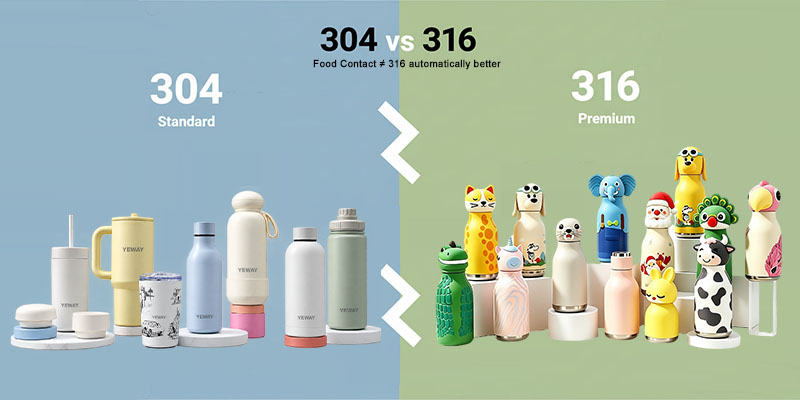
So, when evaluating a stainless steel drinkware product, it is better to distinguish between stainless steel grade and finished-product compliance.
304 vs. 316 Strength: Is 316 Stronger?
Is 316 stronger than 304?
Not necessarily.
Both 304 and 316 are austenitic stainless steels, and their mechanical properties can be relatively similar depending on the exact specification and material condition.
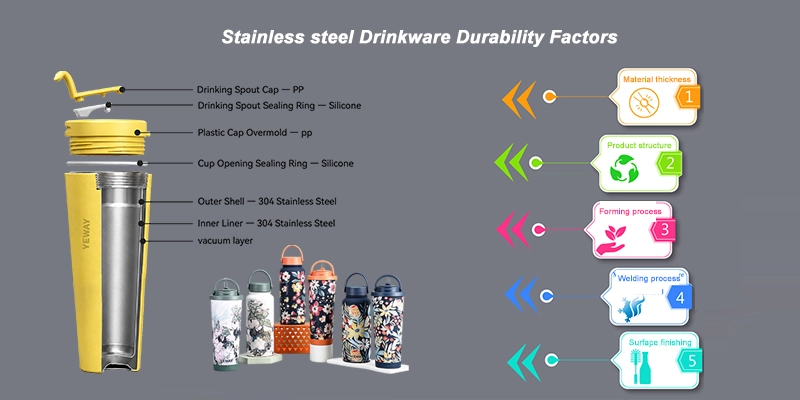
For a finished stainless steels drinkware product, durability also depends on factors such as:
- Material thickness
- Product structure
- Forming process
- Welding process
- Weld quality
- Surface finishing
- Quality control
This means choosing 316 stainless steel does not automatically make a bottle, tumbler, or mug more durable.
If you are looking for durable drinkware in bulk, choosing the right wholesale drinkware supplier and understanding the stainless steel water bottle manufacturing process can help you build a more reliable product line.
304 vs. 316 Heat Resistance
Both 304 and 316 stainless steel can be used in a wide range of high-temperature applications.
However, heat resistance is usually not the main reason to choose 316 over 304.
For stainless steel insulated bottles, the actual temperature performance of a finished product also depends on its design and other components, including:
- Double-wall construction
- Inner and outer wall spacing
- Vacuum layer and vacuum area design
- Bottom structure
- Lid, seals, and gaskets
- Overall structural design
For vacuum-insulated bottles, vacuum structure design, manufacturing processes, and quality control have a much greater impact on insulation performance than simply choosing 304 or 316 stainless steel.
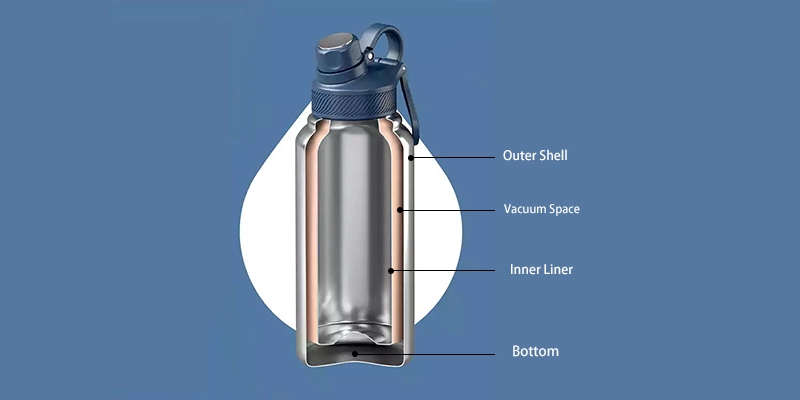
If you are developing or designing a vacuum bottle, see our vacuum bottle design guide to learn more about the key structural factors behind vacuum insulation.
304 vs. 316 vs. 201 Stainless Steel
Besides 304 and 316, you may also come across 201 stainless steel, particularly when comparing material costs.
201 stainless steel is generally a lower-cost alternative to 304. It has a different chemical composition, including lower nickel content and a higher role for manganese.
Its corrosion resistance is generally lower than 304, especially in more demanding environments.
| Feature | 201 Stainless Steel | 304 Stainless Steel | 316 Stainless Steel |
|---|---|---|---|
| Cost | Lower | Medium | Higher |
| Corrosion resistance | Lower | High | Higher |
| Nickel content | Lower | Approx. 8–10.5% | Approx. 10–14% |
| Molybdenum | Generally not a major addition | Generally not a major addition | Approx. 2–3% |
| Typical positioning | Cost-sensitive applications | General-purpose applications | More demanding applications |
201 stainless steel may be suitable for certain applications, but it should not simply be treated as a direct substitute for 304 or 316.
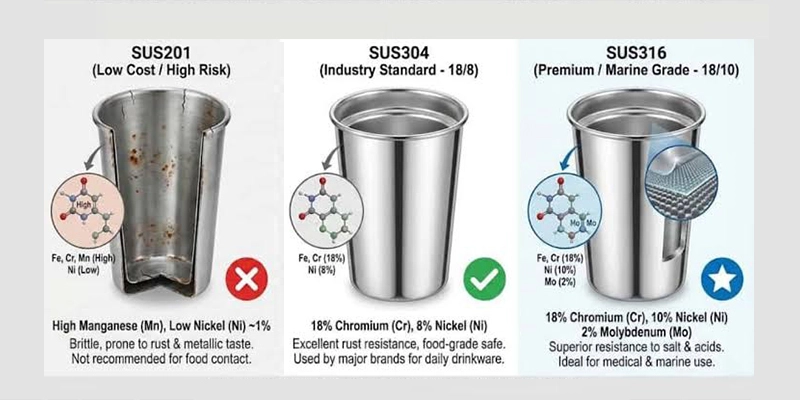
For B2B drinkware purchased in bulk, confirming the actual material grade specified for the product is important rather than judging the material solely by its appearance or price.
From our experience as a China stainless steel drinkware manufacturer with more than 12 years of experience in stainless steel drinkware manufacturing, we have seen that some suppliers may use lower-cost 201 stainless steel in place of specified 304 stainless steel to reduce material costs. For more information on how to check stainless steel grades see our guide on how to verify 304 and 316 stainless steel when sourcing drinkware. You can also read our guide on how to choose a reliable water bottle manufacturer for more practical sourcing tips.
Why Is 316 Stainless Steel More Expensive Than 304?
316 generally costs more because of its chemical composition.
Compared with 304, 316 typically contains more nickel and around 2–3% molybdenum. Molybdenum is an important but relatively expensive alloying element, which increases the cost of the raw material.
However, the final price of stainless steel drinkware depends on more than just the raw material.
Other factors may include:
- Product size and material usage
- Product structure and manufacturing complexity
- Surface finishes and decoration
- Customization requirements
- Order quantity
- Packaging and other production requirements
Therefore, there is no universal percentage difference between finished 304 and 316 drinkware.
If you are looking for custom vacuum insulated stainless steel water bottles for bulk orders and want to learn more about factory pricing, see our guide to custom stainless steel water bottle cost.
Is 316 Stainless Steel Always Better Than 304?
No.
316 has better resistance to certain types of corrosion, particularly chloride-related corrosion. But that does not mean it is the better choice for every application.
304 can be a practical option when:
- General corrosion resistance is sufficient
- The product is used in normal environments
- Cost efficiency is important
- The additional corrosion resistance of 316 is not necessary
316 may be worth considering when:
- Chloride exposure is expected
- The product will be used in coastal or marine environments
- Higher corrosion resistance is an important requirement
- A specific 316 material specification is requested
- The additional material cost is justified by the application
In other words, 316 offers higher corrosion resistance, but “better” depends on what the product actually needs to do.
Which Stainless Steel Grade Should You Choose?
There is no single stainless steel grade that is right for every application.
304 Stainless Steel
304 is often a good choice when you need:
- Good overall corrosion resistance
- Reliable durability
- Good formability
- Food-contact suitability
- Cost efficiency
- A material for general-purpose applications
316 Stainless Steel
316 may be a better fit when you need:
- Higher chloride resistance
- Better resistance to pitting corrosion
- Performance in coastal or marine environments
- A higher corrosion-resistance specification
- A material suited to more demanding conditions
If you’re choosing between 304 or 316 specifically for a stainless steel water bottle, the beverage, environment, product positioning, and target market can all affect the decision.For more information about choosing stainless steel grades for your bottle, see our guide on [304 vs. 316 Stainless Steel Water Bottles: Which Grade Is Right for Your Bottle?].
Frequently Asked Questions About 304 vs. 316 Stainless Steel
What is the main difference between 304 and 316 stainless steel?
The main difference is chemical composition. 316 contains around 2–3% molybdenum, which gives it better resistance to chloride-related corrosion and pitting than 304.
Is 316 better than 304 stainless steel?
316 has better corrosion resistance in certain environments, especially those involving chlorides. However, it is not automatically better for every application. 304 may provide sufficient performance at a lower cost for many general-purpose uses.
Is 316 more food-grade than 304?
Not automatically. Both 304 and 316 are widely used for food-contact applications. Food-contact compliance depends on the finished product and applicable requirements, not simply on whether the material is 304 or 316.
Is 304 stainless steel safe for drinkware?
304 stainless steel is widely used in food and beverage applications and is a common material for drinkware.
Is 316 stainless steel safe for drinkware?
Yes. 316 stainless steel is also widely used for food-contact applications. Its main advantage over 304 is higher corrosion resistance in certain environments.
Is 316 stronger than 304?
Not necessarily. Their mechanical properties can be similar depending on the exact specification and material condition. Product thickness, structur