When sourcing for the school-aged demographic (6-18 years), the stakes are higher. It’s not just about “food-grade”; it’s about chemical stability under long-term thermal stress and physical impact.
This guide moves beyond basic comparisons to analyze the metallurgical and hygiene factors that B2B buyers must consider for premium children’s drinkware.
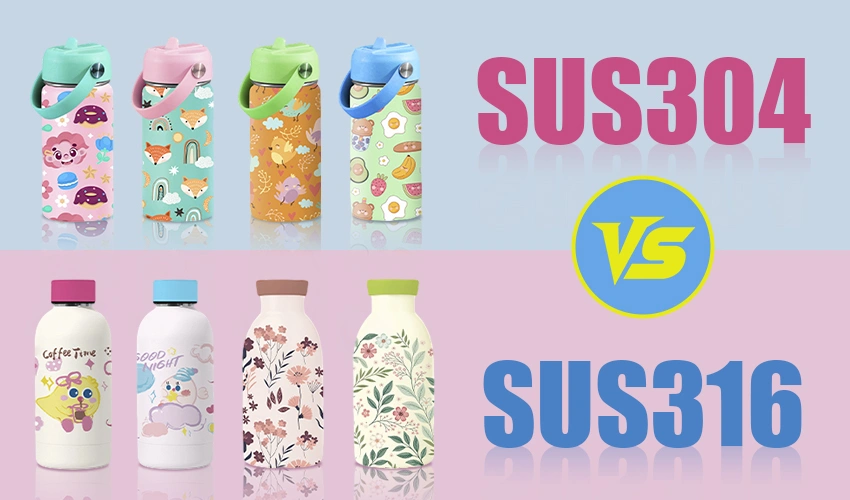
304 vs 316 Stainless Steel Kids Water Bottle
The “Hidden Risk” of Low-Grade Steel in Kids’ Bottles
Children don’t just drink water. They drink milk, diluted fruit juices, and sugar-heavy sports drinks.
- The Corrosion Factor: These liquids, when left in a bottle for 8+ hours in a warm locker, create an acidic environment.
- The 316 Advantage: While 304 is resistant, SUS 316 contains 2% Molybdenum, which creates a high PREN (Pitting Resistance Equivalent Number). This prevents “pitting corrosion”—microscopic holes where bacteria colonize and are nearly impossible to remove via standard washing.
yeway Selection Advice: Choose the 304 stainless steel water bottle for daily use. Opt for the 316 stainless steel kids bottle for complex drinks and environments.
Heavy Metal Migration: Why LFGB Standards Matter More
For the North American and European markets, compliance with FDA is the baseline, but LFGB (Germany) is the gold standard for kids.
- Leachable Metals: Our internal lab tests show that SUS 316 has significantly lower migration rates for Chromium and Nickel when exposed to organic acids (simulating fruit juice).
- Strategic Sourcing: If your brand’s USP (Unique Selling Proposition) is “Ultimate Purity” or “Medical-Grade Safety,” 316 is the only defensible choice that passes the most stringent global heavy-metal leaching tests.
Structural Integrity: Impact Resistance on the Playground
School bottles endure “drop stress.” A critical technical point often overlooked is the Welding Zone.
- Intergranular Corrosion: During the welding of a bottle’s inner liner, standard 316 can sometimes suffer from carbon precipitation. This is why we often recommend 316L (Low Carbon) for the inner liner of high-end kids’ bottles.
- The Benefit: 316L ensures the weld remains as corrosion-resistant as the rest of the body, preventing the “rust line” that can appear after a child repeatedly drops their bottle.
The “Antibacterial” Myth vs. Electropolishing Reality
Many suppliers claim stainless steel is “antibacterial.” This is a marketing exaggeration. Steel is bacteriostatic (it doesn’t grow bacteria, but it doesn’t kill it).
- The Solution: To achieve true hygiene for school use, we implement Electropolishing (EP).
- Technical Detail: Standard mechanical polishing leaves “peaks and valleys” (surface roughness). EP uses an electrochemical bath to strip away the surface at a molecular level, leaving a mirror-finish.
- B2B Value: For a brand, this means you can market your bottles as “Zero-Odour Retention” and “Easy-Rinse Interior,” directly solving a major pain point for parents.
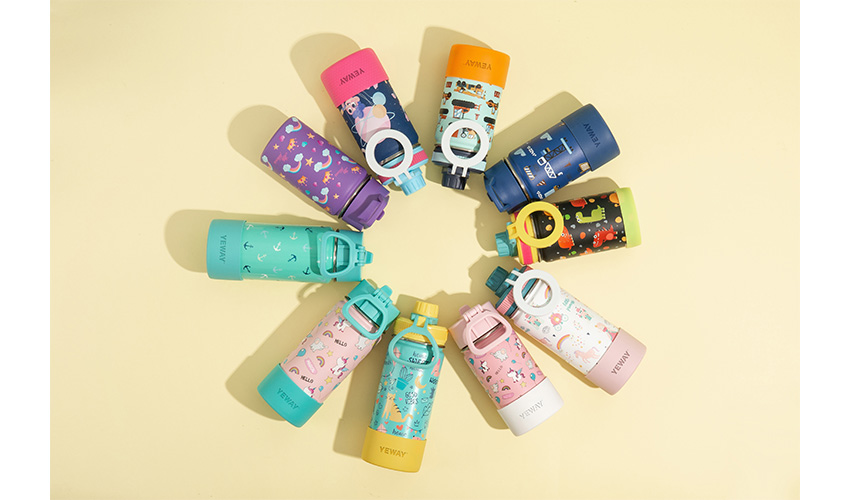
YEWAY 316 Stainless Steel Kids Water Bottles
Sourcing Recommendations for Brand Owners
| Procurement Scenario | GRecommended Grade | Technical Reason |
| Mass School Contracts | SUS 304 (18/8) | Best ROI; fully compliant with standard safety tests. |
| Premium Outdoor/School Gear | SUS 316 | Superior marketing claim; better for flavored/acidic drinks. |
| Luxury/Medical-Grade Brands | SUS 316L + Electropolishing | Maximum corrosion resistance at weld points; easiest to clean. |
Want to see the lab reports for heavy metal migration on our 316 samples? [Request our Technical Compliance Data & Samples Here].
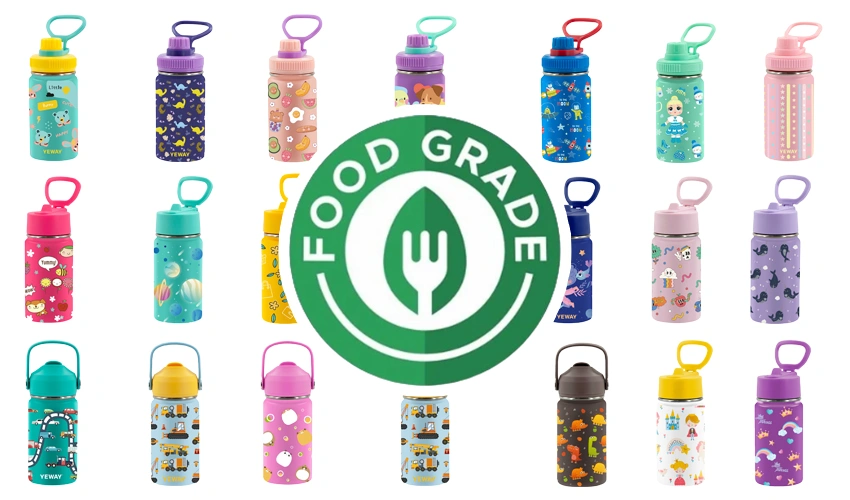
YEWAY Food-Grade Stainless Steel Certification Kids Water Bottles
FAQ for Professional Buyers
Q: Does 316 stainless steel affect the weight of a child’s backpack?
A: No. Metallurgically, the density is almost identical. The weight of a bottle is determined by the gauge (thickness) of the steel sheets (typically 0.4mm to 0.5mm), not the grade of the alloy.
Q: Is 316 stainless steel 100% rust-proof?
A: While no metal is 100% immune, 316 is the most rust-resistant food-grade metal available for commercial drinkware production today.
Q: Is the outer coating (Powder Coating) child-safe?
A: All our coatings pass the Lead-Free and Phthalate-Free tests (CPSIA/CA Prop 65). We use a specialized 3M-adhesion-compliant powder that won’t chip off even under heavy use.
Final Verdict: Investing in the Future of Hydration
In the long run, the “cheapest” material often becomes the most expensive due to customer returns, negative reviews, and potential safety issues. For brands that prioritize longevity and child safety, 316 stainless steel is the superior investment for 2026.
At YEWAY, we are committed to transparency in manufacturing. Our engineering team is ready to help you develop a customized product line that meets the highest global standards. Contact our sourcing experts today to request a 3D prototype of your next best-selling kids’ water bottle.
Technical Note: While this guide focuses on pediatric safety standards, understanding the fundamental chemical differences—such as Molybdenum content and pitting resistance—is essential for any brand owner. For a complete metallurgical breakdown, see our [Ultimate 304 vs. 316 Stainless Steel Sourcing Guide].