Vacuum insulation is the key technology that allows stainless steel water bottles to keep drinks hot or cold for extended periods. But how does it actually work? What makes a vacuum-insulated bottle different from a regular double-wall bottle? And which factors determine its thermal performance?
As a professional manufacturer of double-wall vacuum-insulated stainless steel water bottles, we explain the science behind vacuum insulation, explore the materials and manufacturing processes involved, and compare different bottle structures to help you understand what makes an effective insulated stainless steel water bottle.
Whether you are choosing a bottle for everyday use or developing a custom stainless steel water bottle in bulk for your brand, understanding vacuum insulation can help you make better-informed decisions.
1. What Is a Vacuum-Insulated Bottle?
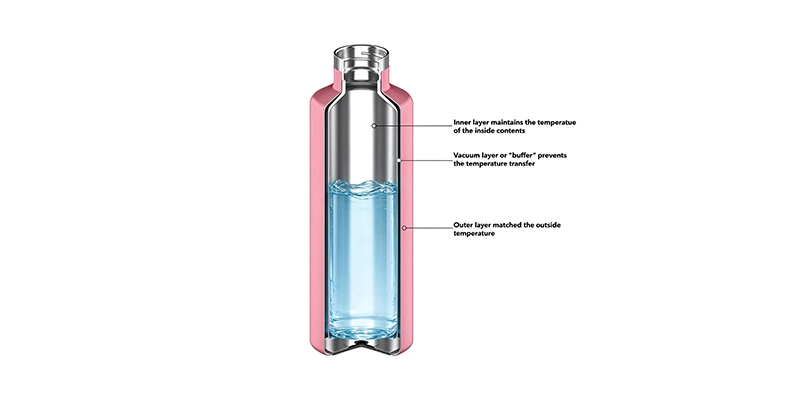
A vacuum-insulated stainless steel bottle is a container made from stainless steel with a vacuum-insulated structure. It can keep beverages hot or cold for extended periods and is widely used for everyday hydration, travel, outdoor activities, sports, and corporate gifts.
2. Benefits of Vacuum-Insulated Water Bottles
- Keeps Drinks Hot or Cold for Longer:With a double-wall vacuum-insulated stainless steel design, beverages can stay cold for up to 24 hours and hot for up to 12 hours, significantly outperforming standard single-wall bottles and insulated bottles with an ordinary air gap.
- No Exterior Condensation:The outer wall stays dry, helping prevent wet hands, damp bags, and water rings on tables.
- Healthier and Safer:Made from food-grade, BPA-free stainless steel, these bottles help prevent harmful chemicals from leaching into beverages.
- Pure Taste and Easy Cleaning:Stainless steel does not retain the taste of previous beverages, and its smooth surface is easy to clean.
- Highly Durable:Branded stainless steel vacuum-insulated bottles can last 5–10 years with proper use and care.
- Environmentally Friendly and Sustainable:Reusable bottles can replace disposable water bottles, reduce single-use plastic waste, and are fully recyclable.
3. How Do Vacuum-Insulated Water Bottles Work?
Heat constantly moves toward thermal equilibrium, flowing from warmer areas to cooler ones. To understand how a vacuum-insulated bottle works, you first need to understand the three ways heat is transferred.
3.1 The Three Ways Heat Travels
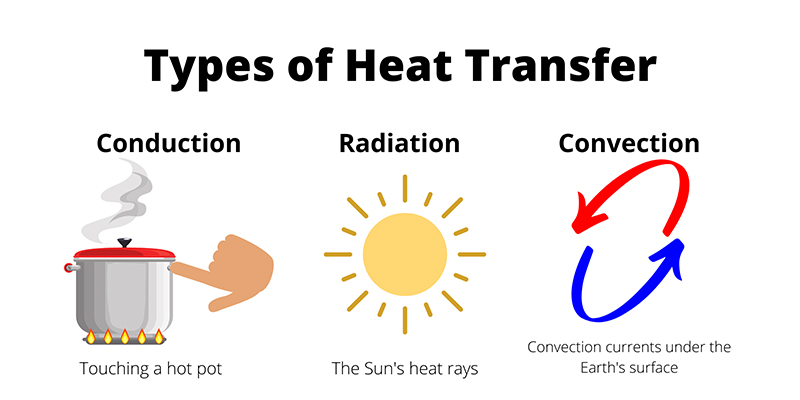
- Conduction:Heat travels through direct contact between materials. For example, when you touch a hot pan, heat moves directly through the metal and into your hand.
- Convection:Heat is transferred through the movement of liquids or gases. This is why a room with moving air can feel cooler on a hot day.
- Radiation:Heat travels as infrared electromagnetic energy and does not require a medium. The Sun heats the Earth through radiation across approximately 93 million miles of space.
3.2 How Double-Wall Vacuum-Insulated Bottle Design Prevents Heat Transfer
A bottle that effectively maintains beverage temperature needs to address all three heat-transfer mechanisms. Many insulated products on the market primarily address only one or two. A properly designed double-wall vacuum-insulated water bottle addresses all three.
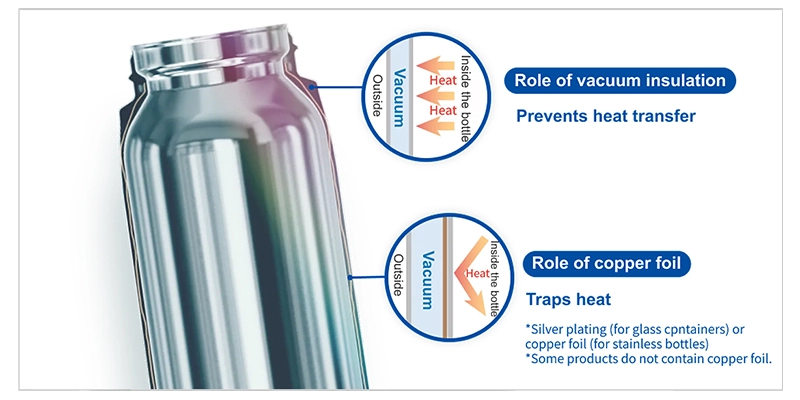
- Conduction: Air is removed from the space between the two steel walls, leaving very few gas molecules to transfer heat across the gap.
- Convection: With virtually no air in the vacuum space, heat cannot circulate or rise through conventional convection.
- Radiation: The inner surfaces of high-quality vacuum-insulated bottles may be polished or coated with reflective materials such as copper or aluminum. These surfaces reflect radiant heat back toward the beverage to help keep hot drinks warm, or away from the beverage to help keep cold drinks cool.
4. Vacuum Insulation Technology: What Makes a Bottle Truly Insulated?
Vacuum insulation is the technological core of an insulated bottle.
4.1 What Does Vacuum Insulation Actually Mean?
A stainless steel vacuum-insulated bottle consists of two walls: the inner wall that comes into contact with the beverage and the outer wall that faces the surrounding environment.The air between the inner and outer walls is removed through a dedicated vacuum process, creating a near-vacuum environment.
This provides three important thermal advantages:
Conduction is greatly reduced: Almost no gas molecules remain in the vacuum space to transfer heat between the walls.
Convection is eliminated within the vacuum space: Without sufficient gas to circulate, conventional convective heat transfer cannot occur between the walls.
Radiation is reduced: High-quality vacuum-insulated bottles may use polished reflective surfaces or reflective coatings, such as copper or aluminum, to reflect infrared radiation rather than absorb it.
Some brands design their insulated bottles with a three-layer structure that incorporates additional reflective layers, often associated with multilayer vacuum structures, to improve thermal performance.
4.2 Industry Benchmarks for Vacuum Manufacturing
| Parameter | Industry Benchmark | Why It Matters |
|---|---|---|
| Vacuum level | 10⁻⁴ Pa or better | A better vacuum generally means less gas-related heat transfer. |
| Evacuation time | At least 20–30 minutes | Helps ensure that air is adequately removed during the vacuum process. |
| Leak detection | Helium mass spectrometry | Helps identify small leaks that may compromise vacuum integrity. |
| Thermal imaging | 380–400°C hot-air injection | Under a specified test procedure, abnormal thermal behavior can help identify vacuum failure. |
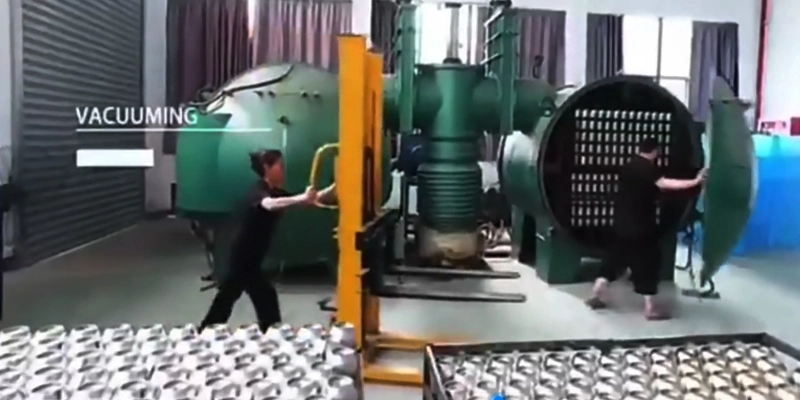
At YEWAY, strict vacuum quality control is an important part of our insulated stainless steel bottle manufacturing process. Consistent manufacturing procedures and transparent quality-control practices help support stable product quality and long-term B2B partnerships.
Vacuum performance also depends on the bottle’s overall structural design, including the gap between the inner and outer walls, wall thickness, and neck construction. For more details, read our guide on how to design a vacuum flask for manufacturing.
5. Why the Lid and Mouth Area Matter More Than You Might Think
Approximately 70% of stainless steel vacuum-insulated bottle manufacturers meet industry standards for vacuum manufacturing. Based on our understanding of the three heat-transfer mechanisms discussed above, heat transfer through the bottle body is already significantly reduced in a vacuum-insulated bottle. Much of the remaining heat loss occurs around the bottle opening.
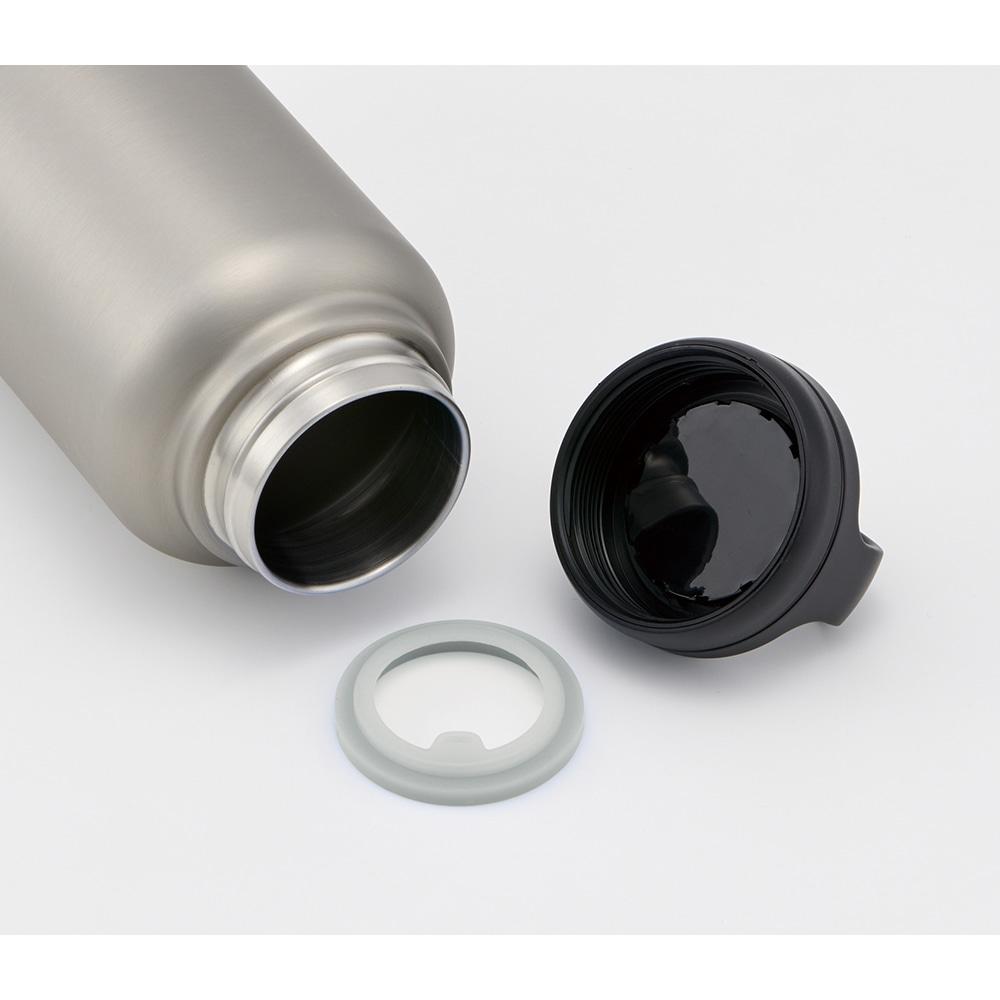
High-quality insulated bottles address this issue in several ways:
- Using polypropylene (PP) lids: PP has relatively low thermal conductivity, helping reduce heat transfer through the lid.
- Designing multi-thread screw caps: A well-designed threaded closure helps create a tighter seal.
- Reducing direct metal-to-metal contact around the opening: This helps minimize thermal bridging between components.
- Ensuring a reliable seal: A properly sealed lid can significantly extend temperature retention.
6. How Long Can a Vacuum-Insulated Bottle Keep Drinks Cold?
Under standardized testing conditions, the length of time a vacuum-insulated bottle keeps beverages cold varies by capacity and product design. Actual performance depends on the starting temperature, how frequently the lid is opened, and the ambient temperature.
Two commonly referenced Chinese standards for stainless steel vacuum-insulated bottles are QB/T 2332-2017 and GB/T 40355-2021. These standards establish a five-level classification system for thermal insulation performance.
There is no single temperature requirement that applies to every bottle. The required thermal insulation performance depends on two variables: bottle capacity and opening diameter.
The following table presents the thermal performance of narrow-mouth bottles with an inner stopper during a 24-hour insulation test, based on the GB/T 40355-2021 reference data.
Thermal Performance of Narrow-Mouth Bottles With an Inner Stopper
| Capacity Range (L) | Diameter <34 mm | Diameter 34–39 mm | Diameter 39–44 mm | Diameter 44–54 mm |
|---|---|---|---|---|
| 0.4–0.6 | ≥45°C | ≥43°C | ≥41°C | ≥37°C |
| 0.6–0.9 | ≥50°C | ≥48°C | ≥44°C | ≥41°C |
| 0.9–1.3 | ≥53°C | ≥51°C | ≥47°C | ≥44°C |
| 1.3–1.8 | — | — | ≥52°C | ≥49°C |
The following table presents the insulation performance of wide-mouth bottles without an inner stopper during a six-hour test under GB/T 40355-2021.
Thermal Performance of Wide-Mouth Bottles Without an Inner Stopper
| Capacity Range (L) | Diameter 54–74 mm | Diameter 74–94 mm |
|---|---|---|
| 0.4–0.6 | ≥54°C | ≥53°C |
| 0.6–0.9 | ≥56°C | ≥57°C |
| 0.9–1.3 | ≥57°C | ≥55°C |
| 1.3–1.8 | ≥55°C | ≥53°C |
The narrow-mouth bottle test runs for 24 hours, while the wide-mouth bottle test runs for only six hours.
7. Will a Vacuum-Insulated Water Bottle Stop Working?
With proper care, the vacuum layer inside a water bottle will not normally stop working.
However, the following signs may indicate that your vacuum-insulated bottle has lost its insulating performance:
- You pour a hot drink into the bottle, and the exterior feels warm to the touch.
- You fill the bottle with ice water, and droplets or condensation appear on the outside.
- Your beverage reaches room temperature within two hours.
8. Why Is 18/8 Stainless Steel Suitable for Vacuum-Insulated Bottles?
Vacuum-insulated water bottles are commonly made from 18/8 stainless steel, which contains approximately 18% chromium and 8% nickel.
This material offers several advantages for beverage containers.
- Corrosion Resistance:Chromium helps form a passive oxide layer that protects against rust and corrosion, including during repeated contact with acidic beverages such as coffee, juice, and sports drinks, when the material and finished product are properly manufactured and maintained.
- No Metallic Taste:Unlike plastics or some lower-quality metals, 18/8 stainless steel is generally non-reactive under normal beverage-use conditions. It helps prevent unwanted metallic flavors, even when beverages are stored for extended periods.
- Structural Integrity:The properties of 18/8 stainless steel allow manufacturers to produce walls that are sufficiently thin to help minimize thermal bridging at connection points while maintaining the durability needed for everyday use.
To learn more about stainless steel materials, please read our [Stainless Steel Material Guide ].
Frequently Asked Questions
How Can Preconditioning Your Bottle Help Extend Its Thermal Performance?
Filling the bottle with hot water for a few minutes before adding a hot beverage—or using ice water to pre-cool it before adding a cold drink—helps bring the inner wall closer to the desired beverage temperature. This can extend the time the beverage stays near its target temperature.
Why Can’t an Insulated Bottle Maintain Temperature Forever?
Even with advanced insulation, heat transfer can never be eliminated completely.
- Radiation still occurs: Although it is significantly reduced, thermal radiation can still transfer heat.
- The lid area remains a potential weak point: Heat can still travel through the lid and connecting structures.
- The temperature difference eventually decreases: Over time, the beverage moves toward the surrounding temperature.
Vacuum insulation greatly slows heat transfer, but over the long term, the laws of physics still apply.
What Is the Difference Between Vacuum Insulation and Double-Wall Insulation?
Both double-wall bottles and vacuum-insulated bottles have two walls. However, their structures and performance differ significantly.
- Double-Wall Bottles:An ordinary air gap sits between the two walls. Air can still transfer some heat through conduction and convection. Under the performance examples used here, beverages in double-wall bottles typically stay cold for 3–6 hours. The exterior may feel cool or slightly cold.
- Double-Wall Vacuum-Insulated Bottles:A vacuum layer sits between the two walls. The vacuum greatly reduces gas-related heat transfer and eliminates conventional convection within the gap, while reflective inner surfaces help reduce radiation. Under the performance examples used here, beverages can stay cold for up to 24 hours and hot for up to 12 hours. The exterior generally stays closer to room temperature, helping reduce condensation and exterior sweating.
For more information, please read our [ Vacuum Insulated vs Double-Wall Stainless Steel Water Bottles].
Why Can Vacuum-Insulated Bottles Keep Both Cold and Hot Drinks at Their Temperature?
Vacuum insulation works in both directions. It creates a barrier that slows heat transfer between the beverage and the surrounding environment.
Cold drinks stay cold because heat from the warmer surroundings has difficulty entering the bottle. Hot drinks stay hot because heat inside the bottle has difficulty escaping.
Why Is My Insulated Bottle Sweating on the Outside?
Condensation on the outside of a bottle means that the outer surface has become cold enough for moisture in the surrounding air to collect on it.
In a properly functioning vacuum-insulated bottle, the outer wall generally stays closer to room temperature, making condensation less likely during normal use.
Exterior sweating can be a warning sign of compromised vacuum insulation, particularly after a severe drop or impact. However, condensation alone is not a definitive indication of vacuum failure because ambient humidity, surface temperature, and bottle design can also affect it.
Does Vacuum Insulation Work for Both Hot and Cold Drinks?
Yes. Vacuum insulation slows heat transfer in both directions. Heat from the environment is less able to enter the bottle, helping keep cold drinks cool, while heat from inside the bottle is less able to escape, helping keep hot drinks warm.
The same technology can help keep ice water cold in 90°F weather and maintain the temperature of hot coffee during a winter commute.
Vacuum-Insulated Bottles vs. Single-Wall Bottles: Which Is Better?
The main difference between a vacuum-insulated bottle and a single-wall bottle is the structure of the bottle body.
- Single-Wall Bottles:A single-wall bottle consists of just one layer of material. Heat can move relatively easily between the beverage and the surrounding environment. If you fill a single-wall bottle with hot tea, the exterior can become very hot to the touch. If you fill it with ice water, the bottle can feel very cold.
- Vacuum-Insulated Bottles:A vacuum-insulated bottle has two walls separated by a vacuum layer. This structure significantly slows heat transfer, so you are less likely to feel the temperature of the beverage through the outside of the bottle. This is what allows a vacuum-insulated water bottle to maintain beverage temperature much longer than a single-wall bottle.
Looking for a Reliable Vacuum-Insulated Bottle Manufacturer?
YEWAY is a specialized manufacturer of vacuum-insulated stainless steel drinkware, developing and producing high-quality water bottles, tumblers, travel mugs, can coolers, kids’ water bottles, pet water bottles, and more.
Our products are designed for a wide range of applications, including home, office, sports and outdoor activities, camping, hiking, and corporate gifts.
With our OEM/ODM manufacturing services, we help brands, wholesalers, and corporate buyers develop products tailored to their market needs. From custom bottle shapes and lids to colors, logos, and packaging, we work with you to bring your product ideas to life.
Ready to discuss your next vacuum-insulated drinkware project? Contact our team to discuss your product ideas and requirements.