Whether you are launching a new drinkware brand, sourcing products for Amazon, or expanding a retail collection, choosing between OEM and ODM tumbler manufacturing is one of the most important decisions in the sourcing process.
Both OEM and ODM manufacturing models are widely used in the stainless steel drinkware industry, but they serve very different business goals.
Some brands need fully customized tumblers with exclusive designs and unique lid systems. Others want faster market entry with lower development costs and smaller MOQs.
Understanding the difference between OEM and ODM can help you:
- Reduce product development risk
- Control manufacturing costs
- Speed up time to market
- Build a stronger brand identity
- Choose the right tumbler manufacturer
In this guide, we’ll explain:
- What OEM and ODM mean in tumbler manufacturing
- The key differences between OEM and ODM
- Which option is better for startups, Amazon sellers, wholesalers, and retail brands
- How OEM and ODM affect MOQ, lead time, tooling, and costs
- How many successful brands start with ODM and later upgrade to OEM
What Is OEM in Tumbler Manufacturing?
OEM stands for:
Original Equipment Manufacturing
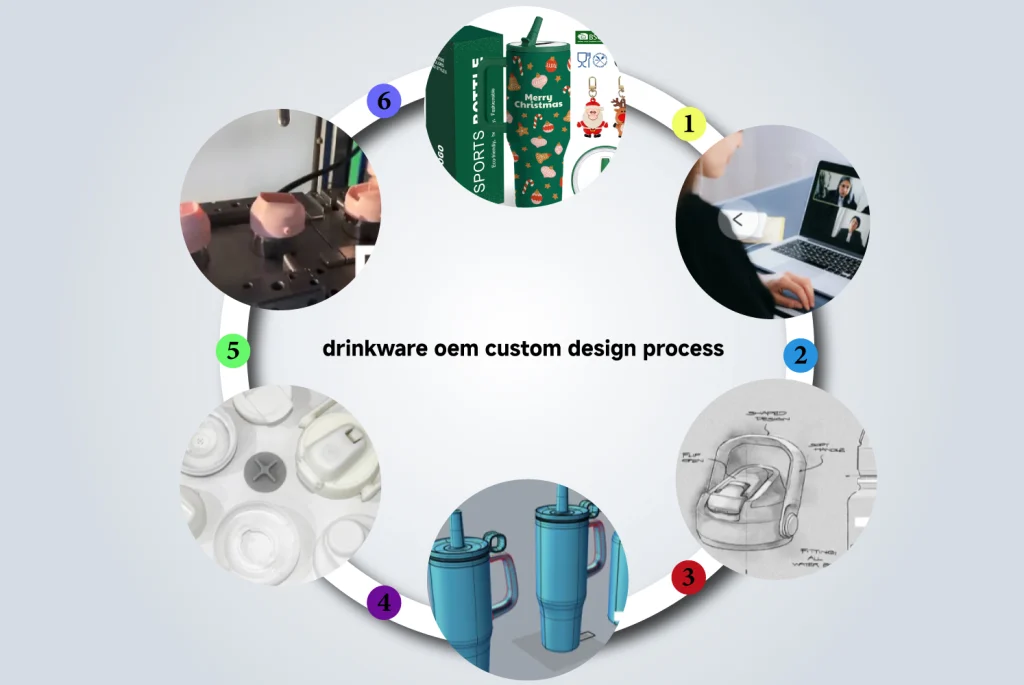
In tumbler manufacturing, OEM means a brand develops a custom product with its own specifications, while the factory handles production.
This usually includes:
- Custom tumbler shape
- Exclusive lid design
- Unique handle structure
- New mold development
- Customized packaging
- Proprietary branding
With OEM manufacturing, the product is built specifically for your brand.
Common OEM Customization Options
Brands choosing OEM often customize:
- Bottle body shape
- Lid systems
- Straw structure
- Capacity
- Powder coating colors
- Laser engraving Logo placement
- Packaging design
Advantages of OEM Manufacturing
1.Full Product Differentiation
OEM allows brands to create unique products that competitors cannot easily copy.
This is especially important for:
- Premium brands
- Retail collections
- Patented products
- Trend-driven drinkware brands
2.Stronger Brand Identity
Custom product development helps brands build:
- Unique appearance
- Recognizable style
- Stronger customer loyalty
3.Better Long-Term Competitiveness
OEM products are harder to replace because the design belongs to the brand.
Disadvantages of OEM Manufacturing
Higher Development Costs
OEM projects often require:
- Mold fees
- Engineering costs
- Prototype development
- Product testing
Longer Development Time
Creating a fully customized tumbler usually takes longer than selecting an existing design.
Higher MOQ
Because OEM production involves custom tooling and dedicated production planning, MOQs are typically higher.
What Is ODM in Drinkware Manufacturing?
ODM stands for:
Original Design Manufacturing
In ODM manufacturing, the factory already has existing tumbler designs, molds, and product structures.
Brands can then:
- Add logos
- Change colors
- Modify packaging
- Adjust surface finishes
without developing an entirely new product.
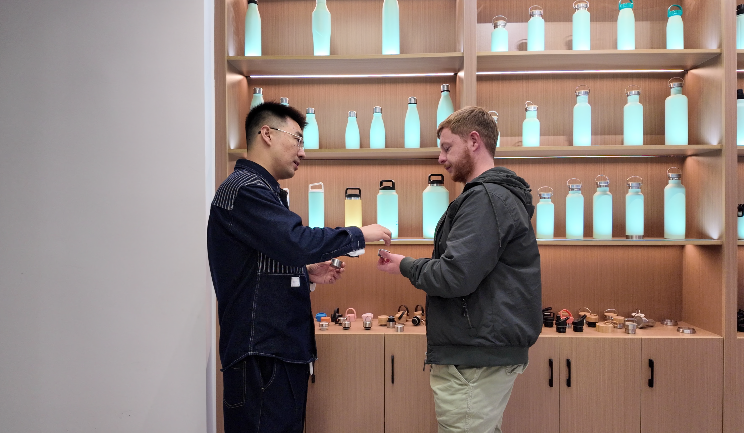
ODM is one of the most popular sourcing models in the drinkware industry because it allows brands to launch products quickly with lower risk.
Common ODM Customization Options
Typical ODM customization includes:
- Logo printing
- Powder coating colors
- Laser engraving
- Packaging customization
- Surface finish selection
- Accessory combinations
Advantages of ODM Manufacturing
1.Faster Time to Market
Since molds already exist, brands can launch products much faster.
This is ideal for:
- Amazon sellers
- Seasonal collections
- Trend-based products
- Startup brands
2.Lower Development Cost
ODM avoids:
- Mold development costs
- Engineering fees
- Structural development expenses
making it far more budget-friendly.
3.Lower MOQ
Many ODM projects support smaller order quantities, helping brands test the market before scaling.
Disadvantages of ODM Manufacturing
Limited Product Exclusivity
Because multiple brands may use similar product structures, differentiation can be limited.
Lower Design Freedom
Brands are restricted to existing molds and structures.
Stronger Competition
Popular ODM products may already exist across Amazon, retail stores, or online marketplaces.
OEM vs ODM: Key Differences Explained
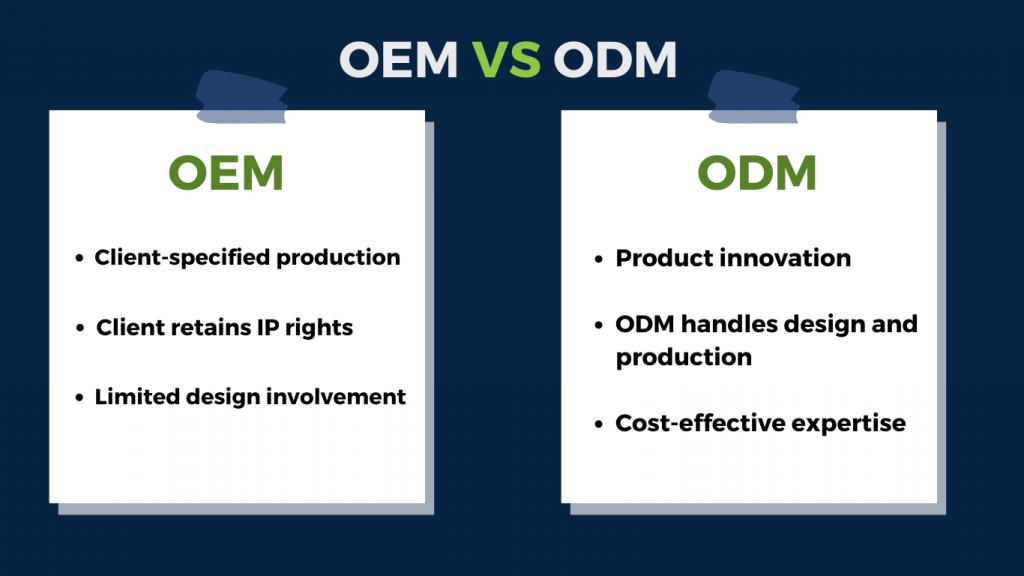
| Feature | OEM Manufacturing | ODM Manufacturing |
| Product Design | Fully Custom | Existing Design |
| Mold Development | Required | Usually Not Required |
| Customization Level | Very High | Medium |
| Development Cost | Higher | Lower |
| Time to Market | Longer | Faster |
| MOQ | Higher | Lower |
| Product Exclusivity | Strong | Limited |
| Brand Differentiation | High | Medium |
| Best For | Established Brands | Startups & Fast Launch |
OEM vs ODM Cost Breakdown
One of the biggest differences between OEM and ODM manufacturing is development cost.
However, many sourcing guides only say:
“OEM costs more.”
Without explaining why.
Why OEM Costs More
OEM manufacturing often includes:
- Mold development
- Engineering design
- Product structure optimization
- Prototype creation
- Functional testing
- Packaging development
- Certification updates
If a brand develops:
- a new lid system
- a unique handle
- a patented structure
the investment becomes significantly higher.
Why ODM Costs Less
ODM products already have:
- Existing molds
- Existing engineering
- Existing product structures
- Existing testing standards
As a result, brands only pay for:
- branding
- packaging
- color customization
- finishing upgrades
This dramatically lowers the initial investment.
How OEM & ODM Affect MOQ and Lead Time
MOQ and production lead time are major concerns for buyers.
Especially for:
- startup brands
- Amazon sellers
- new market entrants
OEM vs ODM Lead Time Comparison
| Process | OEM | ODM |
| Sample Development | 15–30 Days | 3–7 Days |
| Mold Development | Required | Not Required |
| Production Setup | Longer | Faster |
| Mass Production | Longer | Faster |
OEM vs ODM MOQ Comparison
| Type | OEM | ODM |
| MOQ | Higher | Lower |
| Custom Tooling | Yes | No |
| Flexible Launch | Limited | Strong |
ODM is generally more suitable for brands wanting:
- fast product testing
- smaller inventory risk
- lower upfront investment
OEM is better for brands prioritizing:
- exclusivity
- long-term brand differentiation
- proprietary product development
Who Should Choose OEM Manufacturing?
OEM is ideal for brands that want strong product differentiation.
OEM Is Best For:
Established Retail Brands
Brands with existing market presence often need exclusive designs to avoid direct competition.
Brands Developing Patented Products
If your tumbler includes:
- unique lid systems
- custom ergonomic handles
- innovative drinking mechanisms
OEM manufacturing is usually necessary.
OEM helps create a recognizable signature product line.
Who Should Choose ODM Manufacturing?
ODM is often the smartest option for brands entering the market.
ODM Is Best For:
Amazon Sellers
Many successful Amazon tumbler sellers start with ODM products because they can:
- launch quickly
- reduce investment risk
- test demand faster
Startup Drinkware Brands
ODM reduces:
- development cost
- inventory pressure
- time-to-market risk
Wholesalers & Promotional Buyers
ODM is highly suitable for:
- seasonal products
- event merchandise
- promotional campaigns
where fast production matters more than structural exclusivity.
Can You Start with ODM and Later Upgrade to OEM?
Yes — and this is actually one of the most common growth strategies in the tumbler industry.
Many successful brands follow this path:
Step 1:Launch with ODM products to test the market
Step 2:Identify best-selling styles
Step 3:Upgrade to OEM designs for stronger differentiation
This strategy helps brands:
- reduce early risk
- validate demand
- improve cash flow
- avoid expensive failed product development
For many startup brands, ODM is the entry point, while OEM becomes the long-term scaling strategy.
OEM vs ODM for Amazon Sellers
Amazon sellers often face a difficult balance between:
- speed
- differentiation
- budget
- competition
ODM is often the fastest way to enter the market.
However, pure ODM products can become highly competitive over time.
That’s why many successful Amazon brands eventually move toward:
- semi-custom OEM
- upgraded lid systems
- exclusive colors
- unique packaging
- improved ergonomics
to create stronger product differentiation.
Intellectual Property & Mold Ownership
IP ownership is an important topic in OEM manufacturing.
Especially for:
- premium brands
- patented products
- proprietary tumbler structures
Before starting OEM development, brands should clearly discuss:
- Mold ownership
- Product exclusivity
- NDA agreements
- Patent responsibilities
- Design protection
In most OEM projects:
- the buyer owns the custom design
- the factory handles manufacturing
However, details should always be confirmed in written agreements.
How to Choose Between OEM and ODM
There is no universal answer.
The best option depends on:
- budget
- timeline
- brand strategy
- product goals
Choose OEM If You:
- Need a fully customized tumbler
- Want long-term brand differentiation
- Have development budget
- Need unique product structures
- Plan to build a premium brand
Choose ODM If You:
- Need faster market entry
- Want lower development risk
- Have limited startup budget
- Need lower MOQ
- Want to test products quickly
How to Choose the Right Tumbler Manufacturer
Whether choosing OEM or ODM, selecting the right manufacturing partner is critical.
A reliable tumbler manufacturer should provide:
- Stable production capacity
- Quality control systems
- OEM/ODM experience
- Product development capability
- Food-grade certifications
- Flexible customization support
- International export experience
For OEM projects, factories should also have:
- mold development capability
- engineering support
- product testing systems
Final Thoughts
OEM and ODM manufacturing both play important roles in the stainless steel tumbler industry.
ODM is ideal for:
- fast product launches
- lower investment
- market testing
OEM is better for:
- long-term differentiation
- exclusive product development
- premium brand building
For many brands, the smartest strategy is not choosing only one model.
Instead, it is:
Start with ODM → Scale with OEM
This approach reduces risk while creating long-term brand value.
If you are looking for a reliable stainless steel tumbler manufacturer offering both OEM and ODM services, choosing a factory with strong development capability, flexible customization support, and global export experience can make a significant difference in your brand’s growth.