Choosing the right lid is just as important as choosing the bottle itself. Different water bottle lid types use different drinking mechanisms, sealing structures, and internal components, which can affect leak resistance, ease of cleaning, durability, user experience, and manufacturing cost.
Common options include screw lids, chug caps, straw lids, sport caps, flip-top lids, loop lids, push-button lids, and smart lids. Some prioritize one-handed drinking for active use, while others focus on leak resistance, wide-mouth access, portability, or simple cleaning.
One common point of confusion in the drinkware industry is classification. Water bottle lid terminology is not completely standardized across manufacturers. Some terms describe the closure structure, such as a screw lid; others describe the drinking mechanism, such as a straw lid; while terms such as chug cap may describe the drinking opening or user experience. A carrying feature such as a loop may also be integrated into another closure design. As a result, a single lid can fit into more than one category depending on its construction and how it is marketed.
For brands, product developers, and B2B buyers, evaluating a lid requires looking beyond its appearance. Internal components—including threads, silicone gaskets, spouts, valves, hinges, and locking mechanisms—can affect tooling, assembly, quality control, testing, and unit pricing.
This guide explains the main types of water bottle lids, their components, how they work, how they are manufactured, and what buyers should consider when selecting or developing a lid for a stainless steel water bottle.
Quick Comparison of Water Bottle Lid Types
| Water Bottle Lid Type | Primary Drinking Mechanism | Leak Resistance* | Cleaning Complexity | Common Applications |
| Straw Lid | Integrated straw and spout | High when properly designed and sealed | Moderate | Commuting, fitness, daily hydration |
| Sport Cap | Pull spout or valve | High when properly designed | Moderate | Cycling, gym, running, outdoor activities |
| Flip-Top Lid | Direct drinking through hinged opening | High when properly designed | Easy to Moderate | Travel, commuting, everyday use |
| Screw Lid | Direct drinking from bottle opening | High to Very High | Easy | Outdoor, travel, general use |
| Loop / Carry Lid | Usually combined with a screw or other closure | Depends on closure design | Easy | Hiking, travel, large-capacity bottles |
| Chug Cap | Wide or high-flow drinking opening | High when properly designed | Easy to Moderate | Outdoor hydration, sports |
| Push-Button Lid | One-handed opening mechanism | High when properly designed | Moderate | Commuting, travel, everyday use |
| Smart Lid | Electronic or functional drinking system | Design dependent | Complex | Premium and smart hydration products |
*Leak resistance depends on the complete bottle closure system, including the bottle neck, threads, seals, tolerances, assembly, and testing. Lid type alone does not guarantee a specific level of leak performance.
No single lid type is best for every application. The drinking mechanism, sealing structure, component count, target user, cleaning requirements, and customization scope should be considered together.
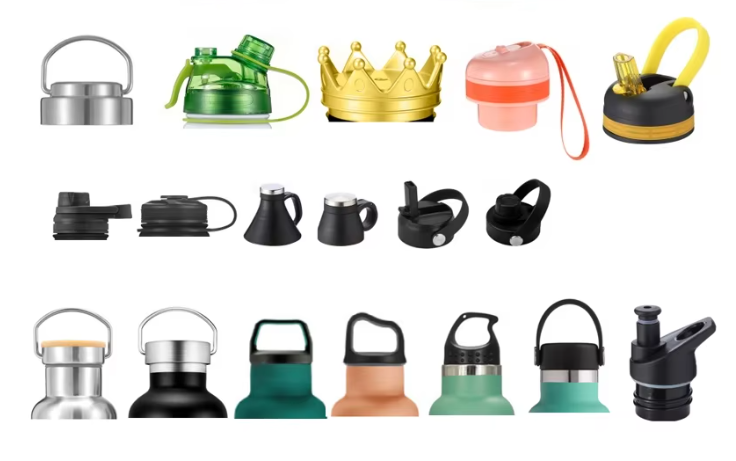
What Are the Main Types of Water Bottle Lids?
Water bottle lids can be classified according to their closure structure, drinking mechanism, opening method, or intended application. These categories can overlap, but the following are among the most common designs used for stainless steel water bottles.
Straw Lid
A straw lid allows users to drink without tilting the bottle. It is widely used for fitness bottles, commuter bottles, and everyday hydration products where upright drinking is convenient.
Key Components
A typical straw lid may include:
- Molded lid body
- Drinking straw
- Spout or mouthpiece
- Silicone gasket or seal
- Air vent or valve
- Connection stem
- Hinge or opening mechanism
- Locking mechanism on some designs
The exact construction varies by lid design.
How It Works
When the drinking opening is opened, liquid travels through the internal straw to the mouthpiece. An air pathway may allow air to enter the bottle as liquid is consumed, helping maintain a consistent flow.
Some designs also incorporate valves or locking mechanisms to reduce leakage during transport.
Advantages
- Allows upright drinking
- Convenient for one-handed use
- Suitable for fitness and active lifestyles
- Can provide controlled liquid flow
Limitations
- More components than a basic screw lid
- More parts and narrow passages to clean
- Silicone seals and valves require proper assembly and maintenance
- Higher component and assembly complexity can increase manufacturing cost
Best Applications
Straw lids are commonly used for:
- Fitness bottles
- Office and commuter bottles
- Travel bottles
- Everyday hydration products
Sport Cap
A sport cap is designed for active use and typically provides quick access to the drinking opening through a pull spout, valve, or similar mechanism.
Depending on the design, users may be able to drink without completely removing the lid.
Key Components
A sport cap may contain:
- Lid body
- Drinking spout
- Silicone valve or seal
- Protective cover on some designs
- Carry loop on some designs
- Locking mechanism on some designs
The number and type of components depend on the specific construction.
How It Works
The drinking mechanism is opened through a pull, push, bite, or similar action depending on the design. When closed, the spout or valve restricts the liquid path and helps reduce leakage.
Advantages
- Fast access to drinking
- Suitable for sports and outdoor use
- Can support one-handed operation
- Can provide controlled liquid flow
Limitations
- More complex than a simple screw lid
- Narrow spouts and valves may require additional cleaning
- Moving or flexible components can experience wear with repeated use
- Additional components can increase tooling and assembly requirements
Best Applications
Sport caps are commonly used for:
- Cycling bottles
- Gym bottles
- Running bottles
- Outdoor hydration products
- Sports-oriented stainless steel bottles
Flip-Top Lid
A flip-top lid uses a hinged mechanism that allows the drinking opening to be exposed without completely removing the closure.
Some designs incorporate a push button, latch, or secondary locking mechanism to prevent accidental opening.
Key Components
Typical components include:
- Lid base
- Hinged cover
- Drinking opening or spout
- Silicone gasket or stopper
- Hinge pin
- Locking mechanism
- Push button on some designs
How It Works
The user releases the latch or locking mechanism and opens the hinged cover. When closed, a sealing component contacts the drinking opening or corresponding sealing surface to help prevent leakage.
Advantages
- Convenient one-handed operation
- Quick access to the drinking opening
- Can protect the drinking area when closed
- Suitable for everyday use and commuting
Limitations
- Hinges add mechanical components
- Locking systems increase design complexity
- More components can make cleaning more involved
- Hinge and latch durability need to be evaluated during product development
Best Applications
Flip-top lids are commonly used for:
- Commuting
- Travel
- School and office hydration
- Everyday-use bottles
Screw Lid
The screw lid is one of the simplest and most widely used water bottle closure designs.
The lid attaches to the bottle through matching threads and typically uses a silicone gasket or sealing ring to create a leak-resistant connection.
Key Components
A basic screw lid may contain:
- Lid body
- Internal or external threads
- Silicone gasket
- O-ring or sealing ring
- Carry loop on some designs
- Grip features on some designs
How It Works
The threaded lid is rotated onto the bottle neck. As the lid reaches the intended closing position, the sealing gasket is compressed against the appropriate sealing surface to create the closure.
Thread geometry, sealing-surface design, dimensional tolerances, and gasket compression all contribute to the final sealing performance.
Advantages
- Relatively simple construction
- Easy to clean
- Few moving parts
- Strong sealing potential
- Generally lower manufacturing complexity than multi-component lids
Limitations
- Usually requires two hands to open
- Less convenient than straw or sport mechanisms for some active applications
- Provides fewer integrated functions without adding components
Best Applications
Screw lids are commonly used for:
- Outdoor bottles
- Hiking bottles
- Travel bottles
- Everyday stainless steel water bottles
- Large-capacity hydration bottles
Loop / Carry Lid
A loop or carry lid is not necessarily a separate drinking mechanism. Instead, it describes a closure that incorporates a carrying loop or handle, often combined with a screw closure.
Key Components
Depending on the design, a loop lid may include:
- Lid body
- Threaded closure
- Silicone gasket
- Integrated carry loop
- Flexible strap or handle
- Handle attachment structure
How It Works
The closure performs its normal sealing function while the integrated loop provides a convenient carrying or attachment point.
Advantages
- Easier to carry
- Useful for outdoor and travel applications
- Can be combined with a simple screw closure
- Provides an attachment point for carrying or securing the bottle
Limitations
The carrying structure must withstand repeated handling and loading. The connection between the loop and the lid therefore becomes an important design consideration, particularly for large-capacity bottles.
Best Applications
Loop or carry lids are commonly used for:
- Hiking
- Camping
- Travel
- Outdoor hydration
- Large-capacity water bottles
Other Water Bottle Lid Types
Beyond the common closure designs above, manufacturers also develop specialized lids for particular drinking mechanisms and user requirements.
Chug Cap
A chug cap is designed around a relatively wide drinking opening that allows users to drink larger volumes more quickly than through a narrow straw system.
The exact construction varies by manufacturer. Some chug-style designs use a secondary drinking spout or opening within a larger closure assembly.
Typical Features
- Relatively wide drinking opening
- Threaded closure
- Silicone sealing components
- Secondary cap or protective cover on some designs
- Carry handle on some models
Advantages
- Fast drinking
- Relatively wide liquid flow
- Convenient for outdoor hydration
- Generally easier to clean than complex straw systems
Considerations
The term “chug cap” is not completely standardized across manufacturers. Buyers should therefore specify the required opening size, drinking mechanism, sealing structure, and overall lid configuration in an RFQ.
Push-Button Lid
A push-button lid uses a button-operated mechanism to open the drinking area, usually with the goal of providing convenient one-handed operation.
Typical Components
- Lid shell
- Push button
- Locking mechanism
- Hinge
- Silicone sealing component
- Drinking opening
- Spring or mechanical latch components on some designs
How It Works
Pressing the button releases a latch or locking mechanism, allowing the drinking cover to open. A secondary lock may be incorporated to reduce the risk of accidental opening.
Advantages
- Convenient one-handed access
- Quick opening
- Modern user experience
- Can incorporate a secondary safety lock
Limitations
- Higher component count
- More demanding dimensional tolerances
- Additional moving parts require durability testing
- Higher tooling and assembly complexity than basic closures
Best Applications
Push-button lids are commonly used for:
- Commuting
- Urban travel
- Office drinkware
- Everyday hydration
- Some cycling and active-use bottles
Smart Lid
A smart lid incorporates electronic or functional components into the bottle closure.
Depending on the product concept, it may include:
- LED indicators
- Sensors
- Electronic control components
- Battery
- Hydration reminders
- Bluetooth connectivity
- Other digital functions
How It Works
Sensors or electronic components can monitor selected product functions and communicate information through LEDs, displays, sounds, or a connected mobile application.
Advantages
- High value-added potential
- Differentiated product experience
- Suitable for premium and technology-focused products
Limitations
- Significantly higher engineering complexity
- Additional waterproofing requirements
- More complex assembly and testing
- Battery and electronic component considerations
- Higher development and production costs
For OEM projects, the smart lid should be evaluated together with the bottle body, electronics, power system, waterproofing strategy, testing requirements, and target-market regulations.
Water Bottle Spout Types
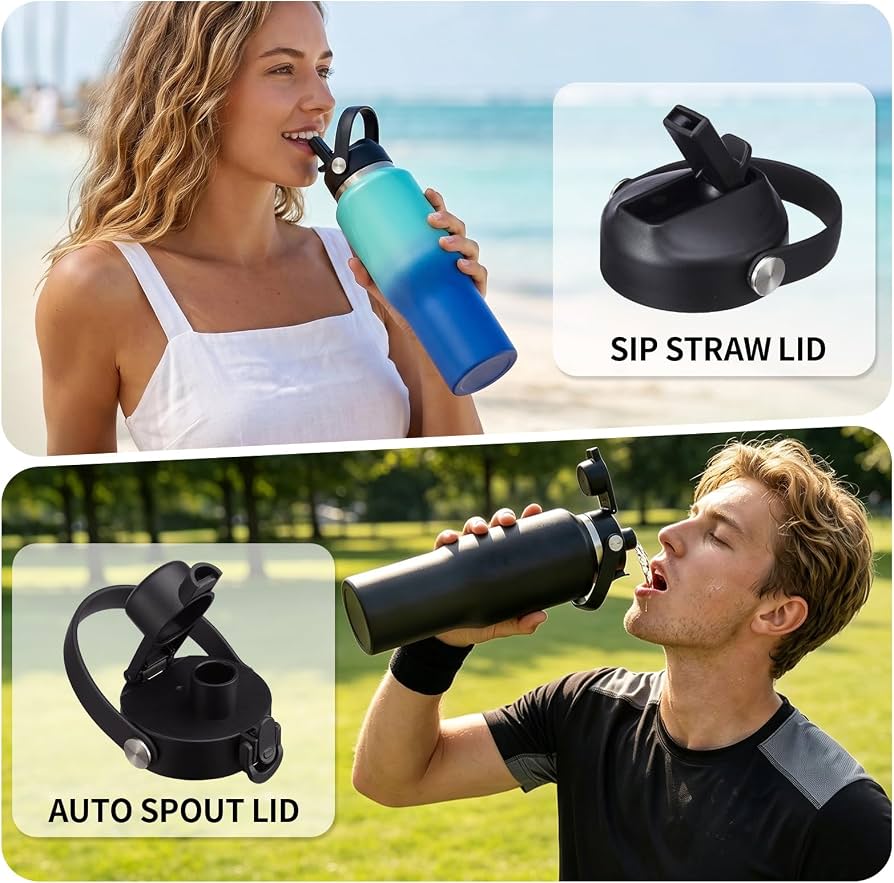
The terms lid, cap, and spout are sometimes used interchangeably in product descriptions, but they can refer to different parts of the drinking system.
A lid or cap generally refers to the closure assembly, while a spout is the component or opening through which liquid is delivered to the user.
Straw Spout
A straw spout directs liquid through an internal straw before reaching the mouthpiece.
It is commonly used in straw lids and allows users to drink without tilting the bottle.
Bite Valve
A bite valve uses a flexible valve that opens when the user applies pressure to the mouthpiece.
It is commonly associated with sports and hydration systems where controlled liquid flow and spill resistance are important.
Pull Spout
A pull spout opens when the drinking component is pulled upward and closes when it is pushed back down.
It is commonly associated with traditional sport-bottle designs.
Push-Pull Spout
A push-pull spout uses a movable drinking component that can be opened and closed manually.
Its structure can be relatively simple compared with some button-operated systems, although the sealing design still needs to provide the required leak performance.
Water Bottle Lid vs. Cap: What’s the Difference?
In everyday product descriptions, “lid” and “cap” are often used interchangeably.
In product development and manufacturing, however, the terminology can vary depending on the design.
A water bottle lid is often used as a broader term for the complete closure assembly, particularly when it contains components such as:
- Drinking spouts
- Straws
- Hinges
- Handles
- Valves
- Locking mechanisms
A water bottle cap may refer to a simpler closure component, such as a threaded cap that directly closes the bottle opening.
However, there is no universally standardized distinction across all manufacturers.
For buyers, the important point is not whether a supplier calls the component a “lid” or a “cap.” The RFQ should clearly define the closure structure, drinking mechanism, sealing method, material, bottle-neck interface, and required functions.
Water Bottle Lid Components Explained
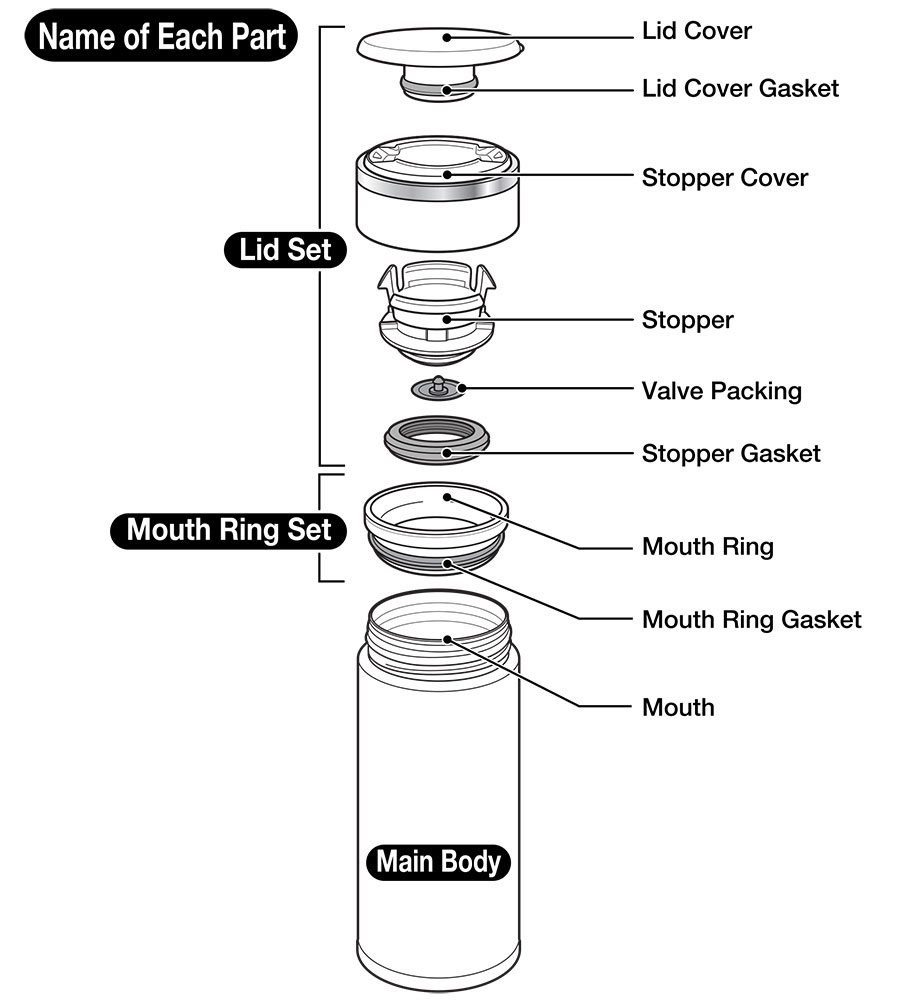
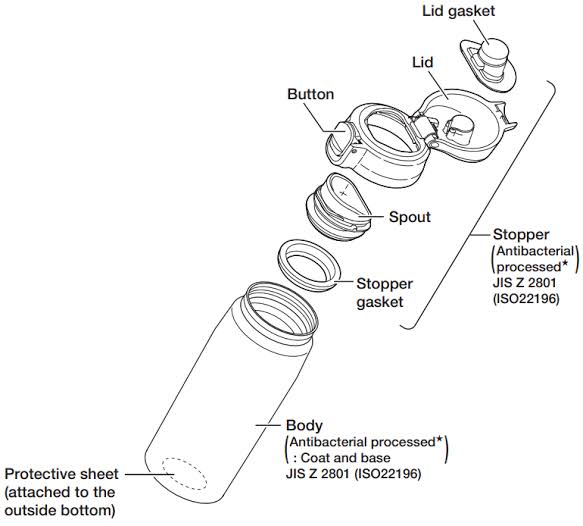
The appearance of a lid can be relatively simple, but the internal construction may involve multiple components.
Understanding these components is especially important when comparing suppliers or developing a custom water bottle.
Lid Body / Lid Base
The lid body provides the main structural housing for the closure and drinking mechanism.
Many plastic lid bodies are produced through injection molding and may contain threaded sections, sealing surfaces, hinge points, or mounting features.
Threads
Threaded connections allow the lid to attach securely to the bottle.
Thread profile, pitch, diameter, dimensional tolerance, and compatibility between the lid and bottle neck are important for consistent assembly and sealing.
Silicone Gasket and O-Ring
Silicone gaskets and O-rings create seals between mating surfaces.
Their material, dimensions, compression, positioning, and resistance to deformation can influence leak performance.
Straw and Spout
Straws and spouts create the liquid path between the bottle and the user.
Their diameter, length, material, connection method, and internal geometry can influence liquid flow and drinking experience.
Valve
Valves can control liquid flow and help limit unwanted leakage.
They are particularly relevant to sport caps, bite valves, and some straw-based systems.
Hinge and Lock
Flip-top and push-button lids may include hinges, pins, springs, and locking mechanisms.
These components need to maintain alignment through repeated opening and closing cycles while preserving the intended sealing function.
Carry Handle / Loop
Handles and loops provide a carrying or attachment point.
For larger bottles, the attachment structure should be evaluated for repeated mechanical loading when the bottle is filled.
What Makes a Water Bottle Lid Leakproof?
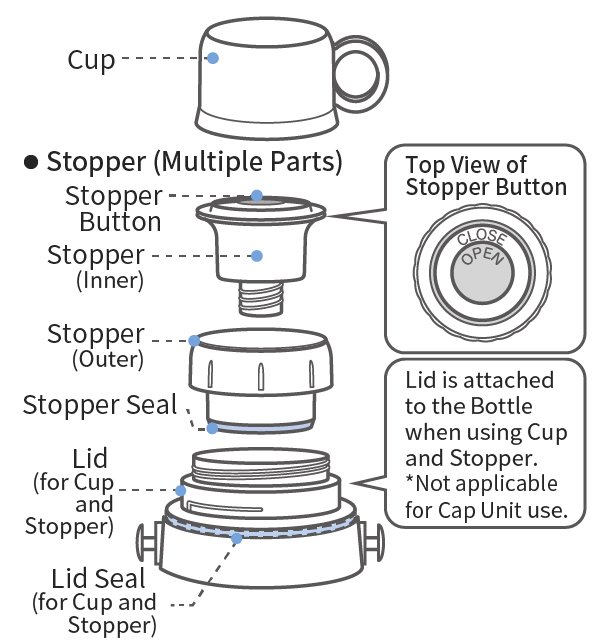
Leak resistance is a system-level performance characteristic rather than the result of a single component.
Important factors include:
Gasket Compression
The gasket needs to maintain appropriate contact and compression against the sealing surfaces.
Material properties, dimensions, compression, and long-term deformation can all affect performance.
Thread Engagement
For screw closures, the bottle neck and lid threads need to be dimensionally compatible.
Thread geometry and closing position affect how the sealing components are compressed.
Dimensional Tolerances
Small dimensional variations in molded and formed components can affect how the parts fit together.
Consistent manufacturing tolerances are therefore important for repeatable sealing performance.
Valve and Spout Sealing
Sport, straw, and push-button designs may rely on valves, plugs, or secondary seals.
These components need to open correctly during drinking while maintaining the required seal when closed.
Assembly Quality
Incorrectly positioned gaskets, valves, straws, or other components can result in leakage even when the individual parts meet their specifications.
Testing
Finished products should be tested according to the required product specification and intended use.
For OEM projects, leak resistance should be defined as a measurable product requirement rather than treated only as a marketing claim.
How Are Water Bottle Lids Manufactured?
The manufacturing process depends on the lid design, materials, number of components, and required functions.
A basic screw lid may require relatively few production and assembly steps, while a straw, sport, or push-button lid can involve multiple molded parts, silicone components, mechanical parts, and assembly operations.
Tooling and Mold Design
Injection molds are designed according to the required lid geometry, material, production volume, and molding process.
Mold design may need to account for:
- Threads
- Hinges
- Undercuts
- Sealing surfaces
- Mounting features
- Moving mechanisms
- Parting lines
- Mold shrinkage
Complex components may require more sophisticated mold structures or multiple tools.
Injection Molding
Many plastic lid components are produced through injection molding.
The selected polymer is heated and injected into a mold cavity, where it cools and takes the required shape.
Common lid materials may include polypropylene (PP), Tritan or other suitable food-contact polymers, depending on the application and specification.
Silicone Component Production
Gaskets, O-rings, valves, and flexible mouthpieces may be produced separately using suitable silicone molding processes.
Material selection and dimensional consistency are particularly important because these components directly influence sealing and drinking performance.
Component Assembly
After individual components are produced, the lid is assembled.
Depending on the design, assembly may involve:
- Installing silicone seals
- Attaching straws
- Installing valves
- Connecting hinges
- Installing buttons or locks
- Fitting springs or pins
- Attaching carry loops
The number and complexity of components directly influence assembly requirements.
Sealing and Leak Testing
Completed lids and bottle assemblies may be checked for leakage according to the product specification.
Testing methods vary depending on the closure design and customer requirements.
Quality Inspection
Manufacturers may inspect:
- Dimensions
- Thread compatibility
- Component fit
- Seal placement
- Appearance
- Button and hinge operation
- Drinking flow
- Leakage performance
Inspection criteria should be defined according to the intended application and customer specifications.
Custom Tooling for OEM Lids
When an OEM project requires a new lid structure, dedicated tooling may be necessary.
Tooling requirements depend on factors such as:
- Lid geometry
- Number and type of components
- Injection-molding requirements
- Mechanical functions
- Material
- Production volume
Tooling should normally be evaluated and quoted separately from recurring unit manufacturing costs.
The lid is only one part of the overall stainless steel bottle production process. For a broader look at how stainless steel bottles are formed, welded, insulated, finished, and inspected, see our guide to stainless steel water bottle manufacturing processes.
How to Choose the Right Water Bottle Lid
The best water bottle lid depends on the intended application, user behavior, performance requirements, and product budget.
Drinking Mechanism
First determine how the target user is expected to drink:
- Direct drinking
- Straw drinking
- One-handed drinking
- Wide-mouth drinking
- Controlled-flow drinking
The drinking mechanism should match the intended use rather than simply the appearance of the lid.
Leak Resistance
For travel, commuting, and outdoor products, leak resistance can be a critical requirement.
A simple screw lid may use a relatively straightforward sealing structure, while more complex lids may require multiple seals, valves, or moving components.
Ease of Cleaning
More components generally create more areas where liquid residue can accumulate.
For products intended for frequent daily use, consider whether the lid can be disassembled and cleaned effectively.
Durability
Moving parts such as hinges, buttons, locks, and valves can experience repeated mechanical stress.
For sports, travel, or heavy-use products, durability should be evaluated during product development and testing.
Application
Different applications have different priorities.
| Application | Commonly Suitable Lid Types |
|---|---|
| Everyday hydration | Screw, flip-top, straw |
| Fitness | Straw, sport cap |
| Cycling | Sport cap, straw |
| Hiking / outdoor | Screw, loop, chug |
| Commuting | Flip-top, straw, push-button |
| Premium smart hydration | Smart lid |
| Kids’ bottles | Straw, flip-top, controlled-flow designs |
The final choice should also consider bottle capacity, target age group, cleaning requirements, retail positioning, and target cost.
Manufacturing Complexity and Cost
Lid complexity affects more than the lid itself.
Additional components or functions may increase:
- Tooling requirements
- Component costs
- Assembly time
- Quality-control requirements
- Testing requirements
- Production complexity
- Minimum economic production volume
A simple screw lid and a multi-component straw or push-button lid should therefore not be compared only by appearance. Their manufacturing structures can be fundamentally different.
Choosing a Water Bottle Lid for OEM Projects
For an OEM or ODM water bottle, the lid should be developed as part of the complete product system rather than selected independently from a catalog.
Product Architecture and Line Consistency
If a brand plans to develop multiple bottle models, consider whether the lid interface, bottle neck, and closure architecture can be standardized across the product range.
This can simplify sourcing, component management, and future product development.
Component Count and Tooling Budget
More components generally mean more tooling, assembly, inspection, or supply-chain requirements.
However, the exact tooling architecture depends on the component design and manufacturing process. A supplier should evaluate the complete lid structure before estimating tooling requirements.
Existing Tooling vs. New Tooling
Using a supplier’s existing tooling platform may reduce upfront development costs and shorten the development timeline when the existing design meets the project’s requirements.
Custom shapes, proprietary mechanisms, or significant structural changes may require new tooling.
MOQ and Production Volume
Custom tooling and specialized components are generally easier to justify at higher production volumes because development and tooling costs can be distributed across more units.
For lower-volume projects, an existing tooling platform may sometimes provide a more practical starting point.
Testing and Compliance
The final lid construction should be evaluated according to:
- Target market
- Material selection
- Intended use
- Food-contact requirements
- Mechanical performance
- Leak-performance requirements
- Applicable product testing
The exact documentation and testing requirements should be confirmed for the specific product and destination market.
How to Clean and Maintain Water Bottle Lids
Water bottle lids often contain more components and narrower passages than the bottle body, so proper cleaning is important.
After use:
- Disassemble removable lid components where the design allows.
- Wash the lid, straw, gasket, valve, and other removable parts with appropriate dish soap and water.
- Use a suitable bottle or straw brush for narrow passages.
- Rinse thoroughly.
- Allow all components to dry completely before reassembly.
- Inspect silicone seals and valves periodically for wear, deformation, or damage.
For complex lids, buyers and end users should follow the manufacturer’s specific cleaning instructions rather than assuming that every component is dishwasher-safe.
What Should You Specify When Ordering Custom Water Bottle Lids?
If you are developing or sourcing a custom water bottle, a clear lid specification helps the manufacturer assess the product accurately.
Your RFQ should specify:
- Lid type and mechanism — screw, straw, sport, flip-top, chug, push-button, or another configuration.
- Drinking mechanism — direct drinking, straw, valve, spout, or other mechanism.
- Bottle compatibility — neck diameter, thread specification, and bottle opening.
- Material requirements — lid material, silicone specification, and other component requirements.
- Sealing requirements — gasket, O-ring, valve, and required leak-performance criteria.
- Functional requirements — handle, lock, button, hinge, valve, or other mechanisms.
- Appearance — color, finish, logo, and decoration requirements.
- Tooling — existing tooling or new OEM tooling.
- Target quantity — sample quantity, initial order, and estimated annual volume.
- Testing requirements — leakage, durability, food-contact, or other applicable testing.
- Packaging requirements — individual packaging, spare components, and retail requirements.
The more clearly the lid requirements are defined, the easier it is for a manufacturer to assess tooling, components, production complexity, testing, and final cost.
For broader guidance on product selection, supplier evaluation, ordering, and B2B procurement, see our guide to [how to buy wholesale water bottles].
Custom Water Bottle Lid & OEM Development
A water bottle lid is more than a closure component. Its structure affects the drinking experience, leak performance, durability, manufacturing process, assembly requirements, and overall product cost.
For brands developing a custom stainless steel water bottle, selecting or engineering the right lid early in the product-development process can help reduce unnecessary tooling changes and production issues later.
YEWAY provides OEM, ODM, private label, and wholesale stainless steel drinkware solutions for B2B buyers, including customized lid configurations and product-development support.
Whether you need an existing lid configuration or a custom closure with new tooling, our team can evaluate the required drinking mechanism, sealing structure, components, tooling approach, and production requirements.
Frequently Asked Questions
What are the main types of water bottle lids?
Common water bottle lid types include straw lids, sport caps, flip-top lids, screw lids, loop or carry lids, chug caps, push-button lids, and smart lids. These categories can overlap because some describe the closure structure while others describe the drinking mechanism or integrated features.
What is the difference between a water bottle lid and a cap?
The terms are often used interchangeably. In general, “lid” can refer to the broader closure assembly, while “cap” may refer to a simpler closure component. However, terminology varies between manufacturers, so buyers should specify the actual structure and function in an RFQ.
Which water bottle lid is the most leakproof?
There is no universal answer based on lid type alone. A well-designed screw closure can provide strong leak resistance because of its relatively simple threaded structure and sealing gasket, but actual performance depends on the bottle neck, gasket, tolerances, assembly, and testing.
What is a chug cap?
A chug cap is a water bottle closure designed around a relatively wide drinking opening or high-flow drinking mechanism. The exact construction varies between manufacturers, so buyers should confirm the opening design and sealing structure when sourcing.
What is a sport bottle valve?
A sport bottle valve is a component that controls liquid flow through a drinking spout or mouthpiece. Depending on the design, it may use a flexible silicone valve, push-pull mechanism, or another flow-control structure.
Are straw lids easy to clean?
Straw lids generally require more cleaning than simple screw lids because they may contain straws, spouts, valves, silicone seals, and narrow internal passages. Designs that allow components to be removed can make cleaning and maintenance easier.
What are water bottle lids made of?
Many water bottle lids use food-contact-suitable polymers such as polypropylene (PP) or Tritan-type materials, combined with silicone seals, gaskets, valves, and other components. The appropriate material depends on the lid design, performance requirements, and target-market requirements.
How are water bottle lids manufactured?
Lid components are commonly produced through injection molding, while silicone gaskets and valves are manufactured separately using suitable molding processes. The components are then assembled and may undergo dimensional, functional, and leak-performance inspections.
Which water bottle lid is best for an OEM project?
There is no single best lid for every OEM project. The appropriate design depends on the target user, drinking mechanism, leak requirements, cleaning expectations, component complexity, target cost, production volume, and whether existing tooling can meet the product requirements.